Hey, I’m walkin’ here

The closest you get to doing nothing and still doing something is walking. I love taking walks, and I do it almost every day as part of my routine. It helps that I am very close to forests and the sea, but the main thing is that it boosts my thinking and my mental state. No one ever came back from a walk and said, “Damn, I should not have taken that walk” (from what I know). It may even be healthy. And one thinks differently when walking, compared to sitting, bicycling, running, commuting, and so on. There’s something about the natural pace of walking that does good things for the way I think.

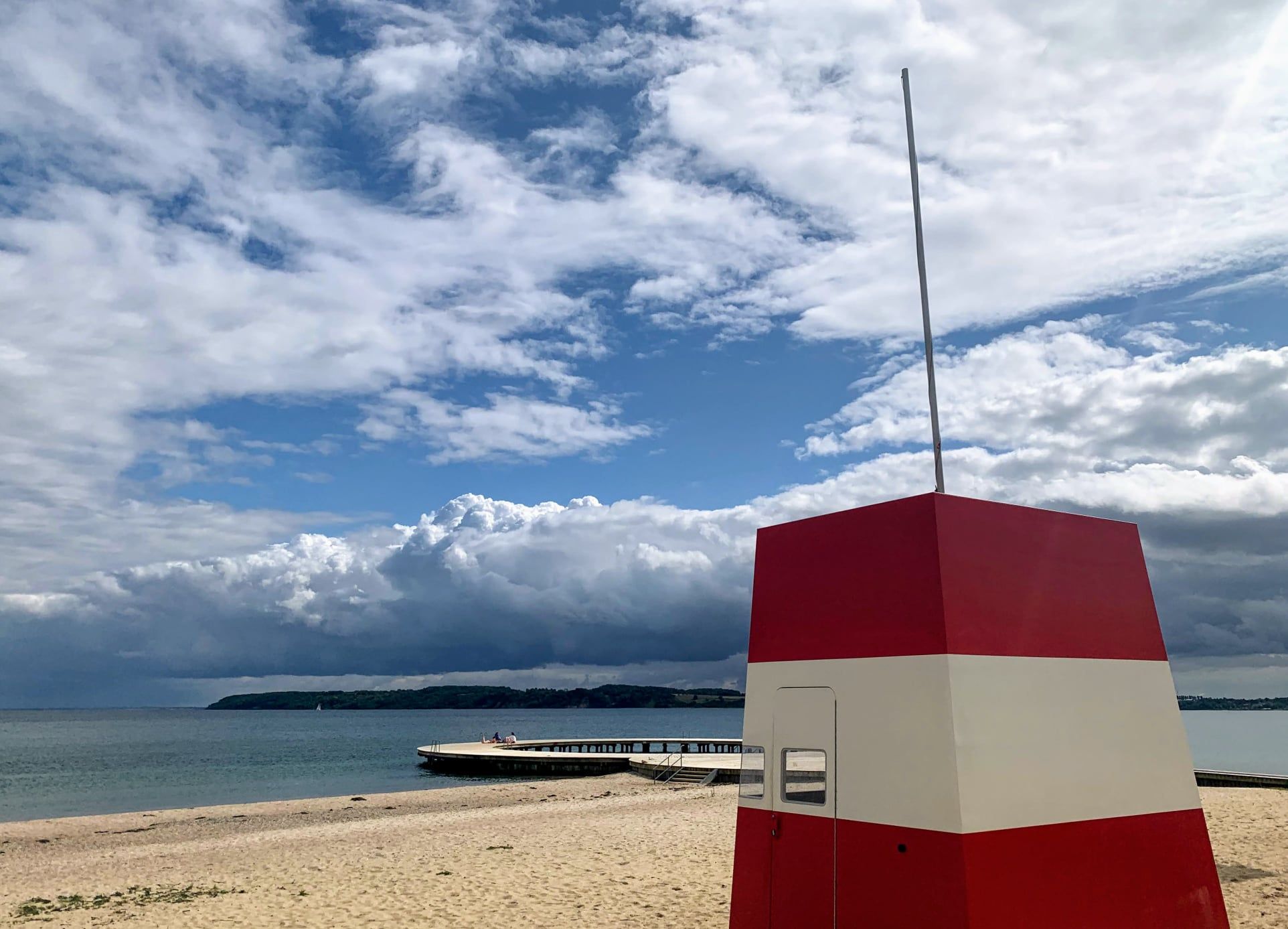
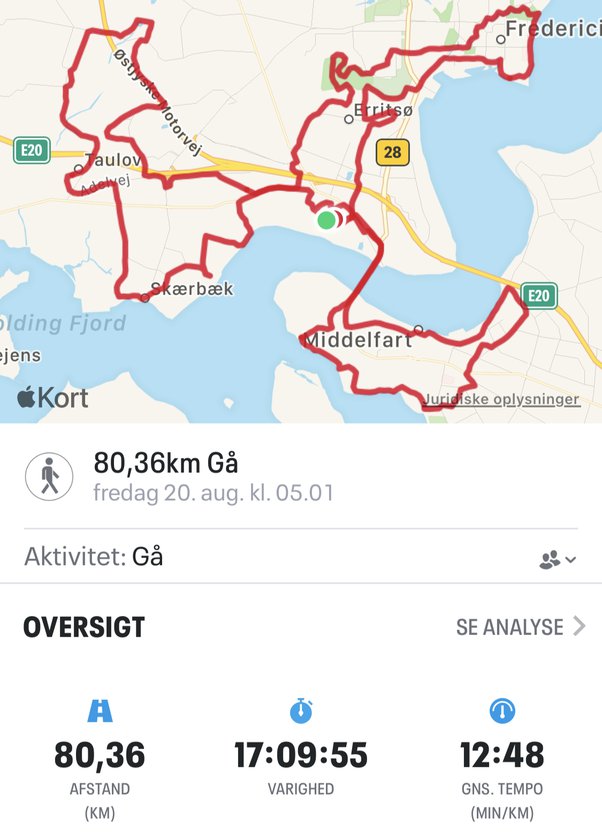
In 2021, I walked 80 kilometers in a single day, from sunrise to sunset. That added up to 104,000 steps, or 50 miles. Why walk so far? Well, basically just to see if it was possible and because it offers a great opportunity to think a lot of thoughts and enjoy some beautiful nature. At least a couple of times a year, I go on a long walk of 50–60 km—it’s a form of meditation, and I highly recommend it. Just start with shorter distances and work your way up.

Everything clicked on that warm day in August: my legs felt good, I got only one small blister, and the weather was perfect. The key is just to maintain a pace of five km/h, including breaks, and to make time for lunch and a big ice cream at Østerstrand in Fredericia. The route was a mix of all the great hiking trails in the area around Lillebælt. I hadn’t planned it in advance, but I made sure to avoid too many hills and to keep a good balance between trails and asphalt. As you can see from the map, I did three loops, so there was an opportunity to quit if things didn’t work out. Never walking that far in one day again. Probably.

Here’s a couple of tips for walking that I have found useful.

I always keep a small backpack with basic supplies ready for a spontaneous long walk. Nothing fancy, just some extra socks, a water bottle ready for filling, napkins, band-aids, my antihistamine pills, a pen + paper. This makes it very easy to walk out the door when I feel like it, no friction.

Walking alone is very different from walking together. Both are great, and I am lucky enough to have two handfuls of good people who want to walk with me. It’s such a perfect combo: good conversations, light exercise, fresh air, and being in nature. Hard to beat that. A bit of route planning adds a lot to the enjoyment.

I am not a fan of walking boots, as I mostly do rather flat routes and surfaces. But I have two pairs of walking shoes, and on the really long trips, I switch a couple of times, including dry socks. And a pair of trainers is fine for walking as well, but good walking socks with dedicated left/right designations are definitely low-hanging fruit. Keep your feet dry at all costs.

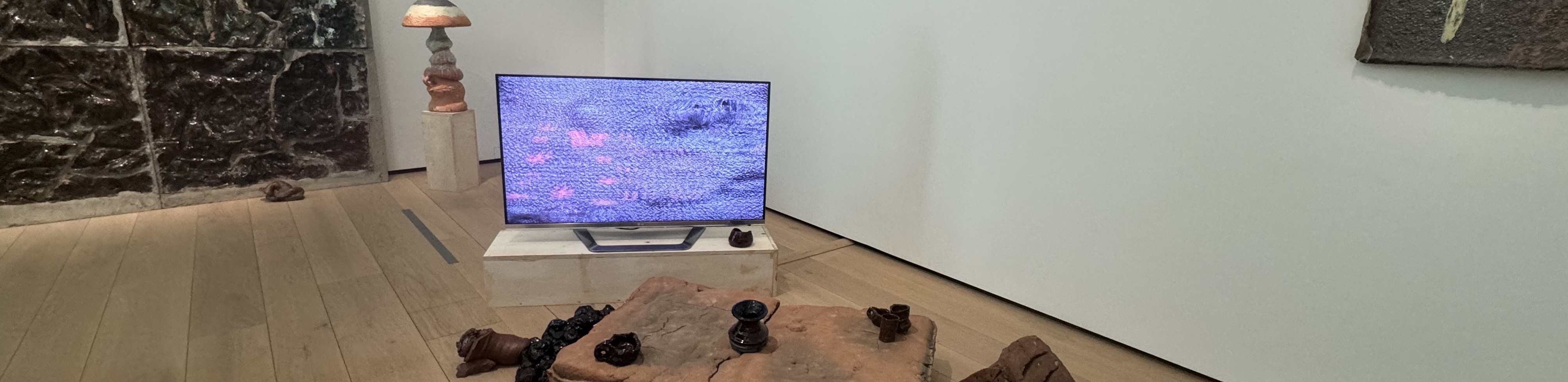
Normally, I don’t listen to music or podcasts while walking. But I often take a lot of notes, always using voice dictation on my phone (just the Notes app + Siri, it works extremely well, perhaps 95% accurate). I also shoot quite a few photos en route; the only rule is that I never go out of my way to take a photo. You can see some of them here.
Me + AI

I believe most of us try to boil AI down to something we can handle mentally; “Well, it’s just advanced autocomplete, it’s just a stochastic parrot, it’s just another tool” etc. etc..”. Sorry to say, it’s much bigger than that. We don’t really know what it is, and people who claim to do so are often dumb or too smart for their own good. Sit down, be humble. AI is not another technology, it’s different. Consider this.

Intelligence may no longer need to be localized within individual minds. Knowledge, once thought to be stored and retrieved like files from memory, now appears capable of being dynamically assembled from vast latent structures. Reasoning, long assumed to be linear and stepwise, is increasingly replaced by parallel, probabilistic processing. And perhaps most provocatively, meaning itself may not require introspection. It can arise in context—without any internal monologue or conscious reflection. 

I enjoy using LLMs every single day. For one thing, they completely replace the rather useless 2025 experience of Googling things. I often need to have things explained to me, and LLMs are great at doing so at any given length or complexity; how does this author compare to this one? Make a list of lesser-known movies based on these three unknown movies, give me the five main points from this book, explain this obscure meme. When ChatGPT was upgraded with memory, it was a real game-changer; suddenly, the answers could be based on earlier chats and things you explicitly wanted it to know about you and your way of thinking. And you can have some great conversations on philosophy, personal development, problem-solving, and any other ‘deep’ topics. Just treat it as a dialogue with a (very) smart friend; sometimes they are wrong, sometimes the thinking is flawed, but you will often be a bit smarter afterwards. I think I have some fairly smart friends, and they will quite often disagree on fundamental questions, which is sobering to observe. I also make an effort to use multiple LLMs as a matter of principle, switching between ChatGPT, Claude, Gemini, and Perplexity. Some may say it’s like going from Coke to Pepsi to Jolly Cola, and it may be so. But it often brings slightly different perspectives even if the frontier models feel rather similar. And one of the worst aspects of AI is the feeling that everything becomes average. Just like our physical spaces are evened out by global Internet culture (ever heard of ‘Airspace‘?), it seems like all writing, thinking, art, etc. converges towards some kind of collective global average. I am not a non-AI purist by any means, feels like there will be a solid future demand for people with strong personalities and original perspectives. So much AI slop out here. There is a big Danish AI Facebook group, and it is obvious that much of the writing there is done by machines, peppered with ghastly AI images. And it feels so bad; sometimes I have an actual physical reaction when looking at it. And don’t give me the old “Well, most people can’t tell the difference anyway” argument; I just don’t like machines acting like people, and people acting like machines. And if we are meeting the machines half way, then it’s a full win for the non-human side.

I’m not using much AI when writing posts here. It just feels off to do so. Full disclosure: the WordPress spell checker has AI built in. And I may use AI to brainstorm ideas and topics, but the actual writing is done 100% by me, flaws and all. Many of my notes are collected in NotebookLM now, it’s interesting to chat and enquire into one’s old thoughts. Oh, and I really, really hate 99% of the ‘art’ done by AI image generators, so there won’t be much of that on lovetobuild. And you can explore this site using an AI. Just so you know.

Vibe Shift

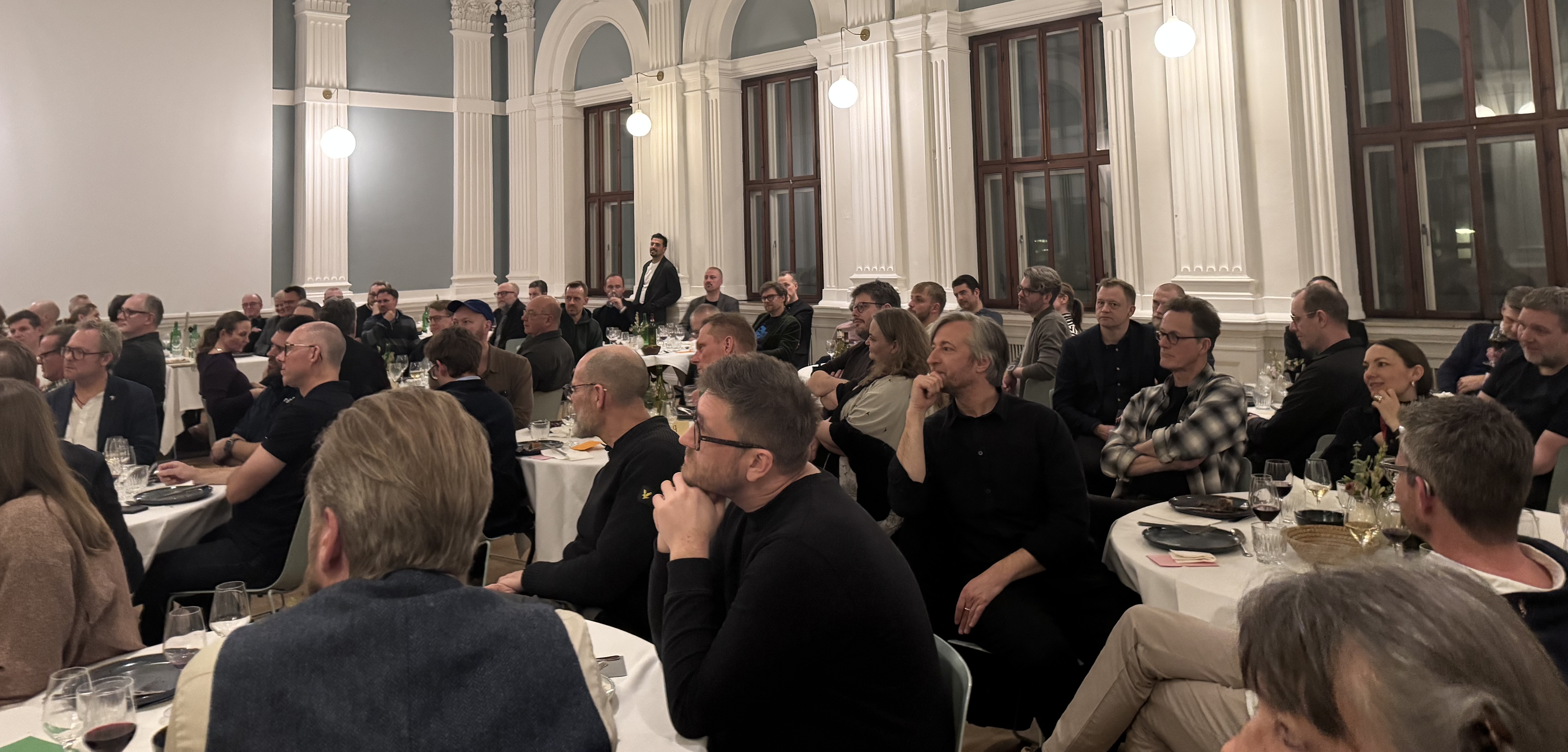
30 years since the first danish web agency Mondo saw the light of day. Thomas Madsen-Mygdal invited 100+ of the usual suspects, the original gangsters, the dreamers, the pioneers, the bizz people, designers, coders, visionaries. Less hair, more glasses than 30 years ago, clothing palette still mainly black and grey. Had a great time. It was quite touching seeing so many familiar and friendly faces in one place, several for the first time in decades.

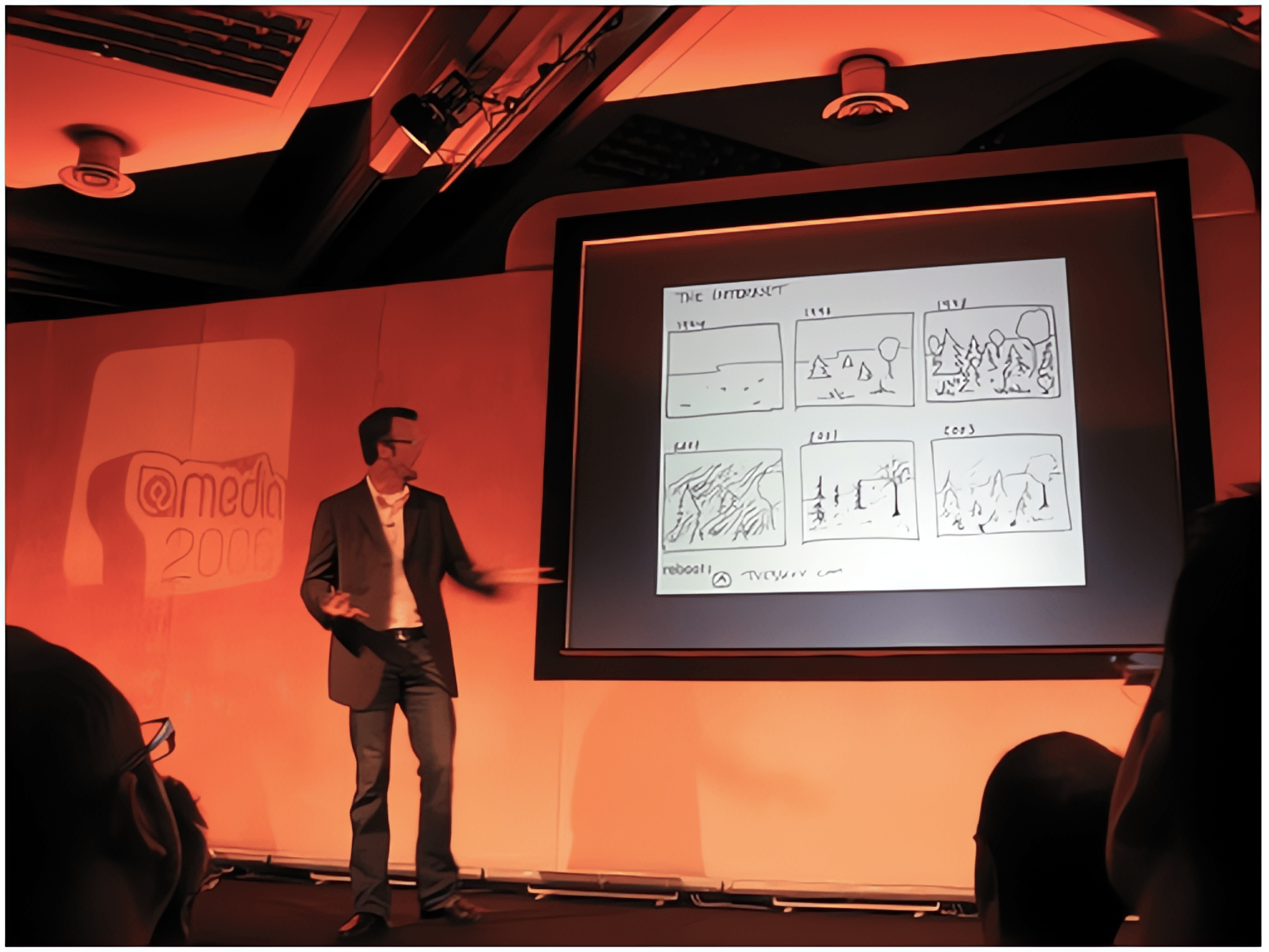
I did a short talk based on a napkin drawing from 2003, done during the Reboot 6.0 conference in Copenhagen. The internet as ecosystem. It started as an open plain. The danish internet index Jubii had 200 links to danish sites when it launched in 1995. Things grew quickly, wild and uncontrolled. Some seeds need to be exposed to fire before they grow, so the big dot-com fire in 2000 destroyed a lot of value short-term, but also cleared the earth for new exciting things. And many of the trees in the internet forest were shallow cardboard cutouts.

The drawing took on its own life, I’ve seen it shared in a few places around the web; I found out Jeff Veen used it to explain Web 2.0 concept. I wrote him to ask where he got the drawing from, he replied;

“I honestly don’t know how I got your drawing — I think someone mailed it to me a couple years ago. I’ve been using it for a little while in my presentations, and it really resonates with people.”

Jeff was part of the early team at Hotwired, the place where the banner ad was invented (the Oppenheimer moment of the commercial internet :). As part of my prep, I asked ChatGPT to interpret my drawing, and it did so without any flaws. LLMs are good at getting metaphors and analogies, so I asked ChatGPT to elaborate on the net as ecosystem, this was the result (notice the fire here in 2025 is just as bad as the dot-com one..) What comes next? Hard to tell, but the vibe is shifting. Big time. Feels bigger and more profound and serious this time around.

Good conversations, a lot of laugning, and a fair bit of net nostalgia (you should also read my earlier post on this). It was always about the people and the culture. Something which Thomas saw with such clarity very early on. And not only that, he acted on that insight and engineered gatherings such as the Reboot conference, The Copenhagen Letter and the open space hub KLUB in Copenhagen.

MEGA- Make Europe Great Again. Take back the web. Do your own thing. Make stuff, it’s never been easier. Get to work.

Here’s to the next 30 years!

And in that spirit; perhaps you were there? Please share your perspectives and thoughts. Danish or english, your choice. Would love to hear from you ❤️

I have missed the internet

I miss the innocence of the early blogging days. No trying to monetize your audience. No algorithms. No funnel talk. It was fun and playful. People were genuinely excited to share their weird obsessions and interests. I will forever try to recreate that corner of the internet.