A few thoughts on the LEGO Smart Brick

There are now more than one trillion LEGO bricks on the planet (yes, it’s true, look it up). I wonder what percentage of those bricks are actively played with? Quite a few are stuck on dusty shelves and in bins under the stairs. LEGO bricks are meant to be played with, and anything that can (re)activate bricks is great in my book. That’s one of the reasons to be excited about the 2×4-sized smart brick. Part of a system, but also something truly new.

Artikelindhold

Looking at that X-Wing fighter makes me happy. It seems like a really fun and robust toy to be played with. A model that can be swooshed around and smaller minibuilds + characters. Tons of opportunities for free play and roleplaying, a microworld. And every part is exposed and playable, as opposed to all the so-called ‘smart toys’ which are often a kind of black box with some tech inside (and no longevity). I like all the mechanical, kinetic builds and tricks used to activate the smart brick in the Star Wars sets. The smart brick has to be physically moved to activate, and that is both banal and profound. It feels both novel and old school LEGO at the same time. I very much like that there are no screens involved. I once said (half-jokingly) that augmented reality play is great for all kids with three arms: two for playing and one to hold the phone. My thing is open-ended physical play, and it feels like the smart brick will support that well.

The smart mini figures are speaking a gibberish language similar to the one in the LEGO computer games. Would the product be better if it could produce perfect audio samples from the Star Wars movies? I would say a big no. I think the product has about the same resolution as LEGO bricks. A LEGO X-wing is not a perfect replica of the craft seen in the movie either; it has a different resolution and can, of course, be broken down into small pieces. Much of the critique of the LEGO smart brick sounds to me quite similar to the time when people were complaining about there being too many special LEGO pieces. That critique has pretty much gone away, but it was also quite silly back in the day. To this day, you are most welcome to buy a big box of classic 2 x 4 LEGO bricks; you can even build a Star Wars X-Wing out of those bricks. It will be clunky and in a different resolution, but no one is stopping people from doing this. Same goes for the smart brick. And the current sets are targeted at kids from 6 to 9 years old, so perhaps also let them have a go and decide? That is not to say that the brick will automatically be a success in the market, far from it. But I’m confident that the smart brick will stay around for a long time if the economics behind it make sense. Of course, if LEGO is losing money on each set and if the smart brick does not result in increased sales of traditional bricks and engagement, then it will be killed off eventually to make shelf space for more profitable products. But I could see a market for more creative, interactive toys. The majority of the so-called smart toys are incredibly bad, with no real longevity or lasting play value.

The platform and the tech, as they stand now, are surprisingly close to the concept presented to the team I was part of some five years ago. Impressive! I can easily imagine the many prototypes, pivots, compromises, Teams meetings, and long days along the way. But the core concept is intact, including the positioning system, as described in the “Saved by the bell” section of this behind-the-scenes story. I have absolutely no insider insights into this, but I’m guessing that the smart brick roadmap is long and wide, and I sincerely hope LEGO has the patience to let the system unfold over a long period of time.

Godtfred Kirk Christiansen (creator of the original LEGO brick) was known to go down on his knees in product meetings, literally, in order to see (and try) the prototypes from a child’s perspective. This is still sound advice and worth remembering. To me thay is still the core LEGO experience. Godtfred would probably have liked smart bricks (perhaps initially sceptical, but I’m guessing he would have been amazed by the new, old 2×4 smart brick. Star Wars probably not so much – he was not so big on “battle play” 🙂

My first boss at LEGO, Jens Nygaard Knudsen (inventor of the minifigure), once remarked that lights were more important than sound, because kids could make their own sounds while playing with LEGO – but kids can’t do lights. I’ve always thought that was both hilarious and true. So back in the 80s we had the 9V Light & Sound system, and I designed a LEGO Space Police set (6781) that only had blinking lights, no sound (that sound brick was incredibly expensive). I’m sure kids will continue to supplement the smart brick sounds with their own. And I also strongly suspect that Jens too would have loved the smart brick if he were still here.

It was the first project for me where remote work was not just an option, but necessary (there was some COVID around at the time). It was also an a-ha moment for me to see how well that worked – most of the time probably more effective than being in the same room. Such a great team, full of talented people who could execute quickly. Sometimes we would literally start with a blank slate on Monday morning and end up with a working prototype to play with on Friday. It was great, and sometime I miss being part of a team like that.

For me personally, it was a huge pleasure to build actual, physical LEGO models again — lots of fun. I did a few runs to the local Føtex to get bricks (at the time it was faster than going to locked-down Billund), but I also took a deep dive into my own vault for materials. So some of those model prototypes literally contain elements from my childhood (and my kids’ childhood as well). Not many products in the world can do something like that. The system works.

Note: I haven’t yet played with the final products, but I’m hoping to do so before too long.

Blackstar

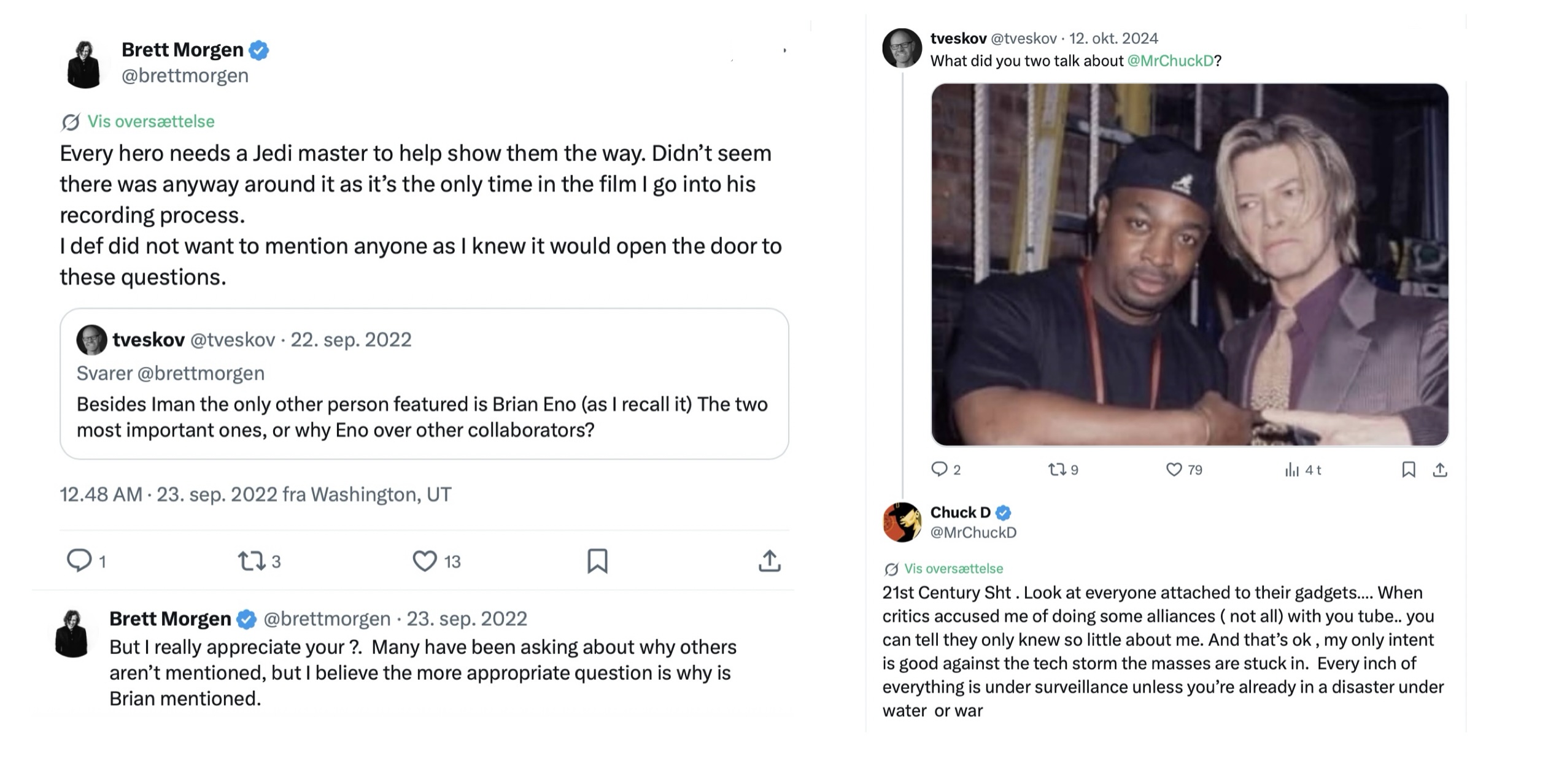
David Bowie died on this day ten years ago, so I watched my favorite music ‘documentary’ once again. It is Moonage Daydream by Brett Morgen, and it is brilliant. Such a dense piece of visual art and storytelling, extremely multifaceted and complex, like Bowie. It took five years to make in total and two years to edit, and it is easy to see why. I also watched the new documentary ‘Bowie: The Final Act,’ and it was good. (If you are in Denmark, watch it here). Also, check out Bowie Bible, what a website (yes, those are still around). And ‘David Bowie – The Last Five Years’ is free to watch on YouTube, recommended.

“At the turn of the 20th century, Friedrich Nietzsche proclaimed that God is dead and that man had killed him. This created an arrogance with man that he himself was God. But as God, all he could seem to produce was disaster. That led to a terrifying confusion: for if we could not take the place of God, how could we fill the space we had created within ourselves?”
David Bowie, 2002

Moonage Daydream starts with this quote which leads into this monologue about the nature of time.


There were many things to like about David Bowie besides the music; he loved art and knew a lot about it, was an okay painter himself, read a lot of books, and last but not least, he had a great sense of humor. Some saw him as somewhat distanced and cold person, but he was often very funny in interviews and seemed to enjoy a good laugh at the absurdity of fame, life, and death.

A favorite moment; Bowie covers Simon & Garfunkel’s “America” for the post 9/11 benefit concert in October 2001. He was a resident of NYC at the time, and it seems to me that he dialed up his english accent, perhaps to empasize the city’s international/immigration vibe. Enjoy this simple performance.

Where AI is going

AI has become a Rorschach test of sorts; you can tell a lot about a person from their general thoughts and stance on the topic. As with, e.g., social media, it is a complex and complicated thing to grasp, developing and changing constantly, impossible to pin down as either ‘good’ or ‘bad’. Both AI and SoMe are multidimensional issues, and both can accelerate, distort, and enhance all things that were already in the world, good and bad. But it is clear that the outer extremes for AI are much more radical compared to the effects of SoMe, from ‘existential threat’ on one side to ‘work-free abundant nirvana’ on the other. Some people use AI to become dumber at an alarming rate; other people that were already smart seem to use AI almost as a newfound superpower (although we are still waiting for the first one-person billion-dollar company to arrive, I think?). And the smartest people I know have very different takes on where AI is going. No one knows. But I would warmly recommend listening to ‘The Last Invention podcast’ for nuanced and insightful takes on AI and where we are headed; I have been through all the episodes; it’s really good. (Find it on YouTube, Spotify, or Apple Podcasts).

Liv Boeree acts it out..

Also, check out ‘The Thinking Game,’ an award-winning documentary about the rapid rise of AI and the possible road towards AGI, featuring DeepMind and the company’s co-founder Demis Hassabis, who I think is fair to call a genius. His first computer was a ZX Spectrum (Yay!), and he grew up with games and gaming (he worked as a game designer at a young age; this article tells that story and more). The movie documents the journey from early attempts to play simple Atari video games on to AlphaGo, AlphaFold, and beyond. One interesting point from the movie: Hassabis insisted that the company should stay in London as he saw a lot of untapped European AI talent. The obvious thing to do would be to relocate to Silicon Valley, but no. The movie presents a somewhat one-sided and probably too positive outlook (no mention of Geoffrey Hinton, OpenAI, and all that took place in parallel to DeepMind’s work). But well worth a watch, and can do that right here: (or see more posts on AI here)

Digging too deep into the datamine

Many years ago, I took on a somewhat ‘special’ freelance job. It was for Jubii, the big Danish portal I also wrote newsletters for. They were planning to launch a new section called “Jubii Lir’kassen” – a large collection of all that ‘humorous’ stuff office workers forward to each other via Outlook. The raw material was a big, unfiltered lump of content pulled from Lycos, which owned Jubii at the time (2003). Lycos already had an “Absolute Viral Golden Collection” in several countries, and my task was to censor, categorize, and describe the content prior to the Danish launch. Looking back, it was very much the shape of things to come, and not in a good way..

At first glance, it seemed like a fun way to spend a couple of days. I can’t recall how many items there were in total – but we’re talking a lower-end four-digit number. The pay was five-digit, and I figured that if I could finish it in no more than three days, I’d walk away with a decent hourly wage. So, early that first morning, I cheerfully launched into the task, actually looking forward to a few unpretentious days as a metadata slave. Because of the content management system, the work had to be done on a PC – and even though such a Windows XP contraption had never set foot inside Tveskov HQ before, I managed to get hold of one thanks to my brother Thomas. So I settled in with my big coffee mug within arm’s reach, in front of the humming, buzzing machine with its big thick CRT screen, and began working through the pile of ‘content.

Very quickly, I discovered that a high number of people from corporate environments have a close relationship with their Office suite. A huge amount of funny cat pictures, death videos, and gag cartoons were buried deep inside Word documents, PowerPoint presentations, and even Excel spreadsheets. People use the tools they know, and instead of simply forwarding a funny JPEG, many of those with a “PC driver’s license” embedded the images where they felt more in control. Good for them, bad for me – the constant switching between Office programs and the CMS system felt like wading through thick, sticky syrup, not a pleasant sensation with that much work ahead.

And of course, it’s never great to sit at a computer you don’t know well. The mouse feels off, the keys are arranged just differently enough to be annoying. Around lunchtime on day one, I began to realize the project would take significantly longer than I had expected.

But what really started to gnaw at me wasn’t the time. It was the stuff upon my screen.

I have never, in such a short span, seen so many people get hit by trains, buses, cars, bicycles, dogs, and other moving objects. There was also an overwhelming number of amazing soccer goals, kids falling in “funny” ways, vomit, broken limbs, and racy jokes, of course styled in Comic Sans and garnished with an absurd number of smileys. It was as if the entire decline of Western civilization passed through me, via small bite-sized nuggets of digital garbage.

Julia Allison (remember her?) once said that there are three things that bring success online: funny, boobs, and kittens. Oh Allison, if only you knew how right you were.

Gradually I realized it’s a rough life being a day laborer in the data mines deep down in the belly of the big portals. After day one, I was completely empty and numb, but still in fairly good spirits. When I shut down the PC on day two, I wasn’t so sure anymore. Especially after going through all the videos that didn’t get approved because they were too bizarre, too violent, or otherwise inappropriate for the general public. All that death and dismemberment. The whole thing started to feel like a deranged Word-based RPG where the gameplay couldn’t get sleazy or extreme enough.

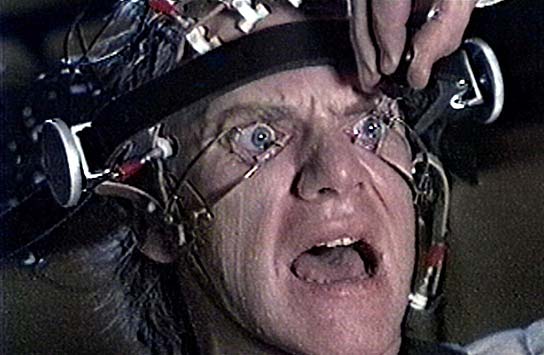
Remember poor Alex at the end of A Clockwork Orange? It was like that.

That night I had evil, evil dreams – cats and puppies being brutally kicked into clip-art soccer goals over and over again by hyperactive Page 3 girls, while I flew off a motorcycle ramp surrounded by drooling, manically grinning babies with enormous eyes staring at me from all sides. And the next morning, it was back down into the data mine again. Fortunately, I’ve repressed most of what I saw back then. I do, however, still remember this little MTV gem I titled “Use the Force, Lorenzo.” Thankfully, there was some harmless and funny material in the pile – it just got harder and harder to spot as time went on.

Like a desperate jet pilot slamming “Eject, Eject” on the escape seat, I was clicking “Reject, Reject” in the CMS system just to make the images disappear. Eventually, it became really difficult to tell which videos crossed the line – a line that got fuzzier and fuzzier as my ability to think clearly faded, while the PC just kept buzzing away as if it couldn’t care less about what was passing through it.

That final day was like a simulated car crash in extreme slow motion. Visual distortions, nausea, and self-pity in equal measure. I was confused and numb. Synapses burned out. Too many inputs. Too much metadata to fill out. Overload. Wish I could forget what I saw. But I got through and got paid.

Game over, man. Insert coin.

Hundred years of Bang & Olufsen

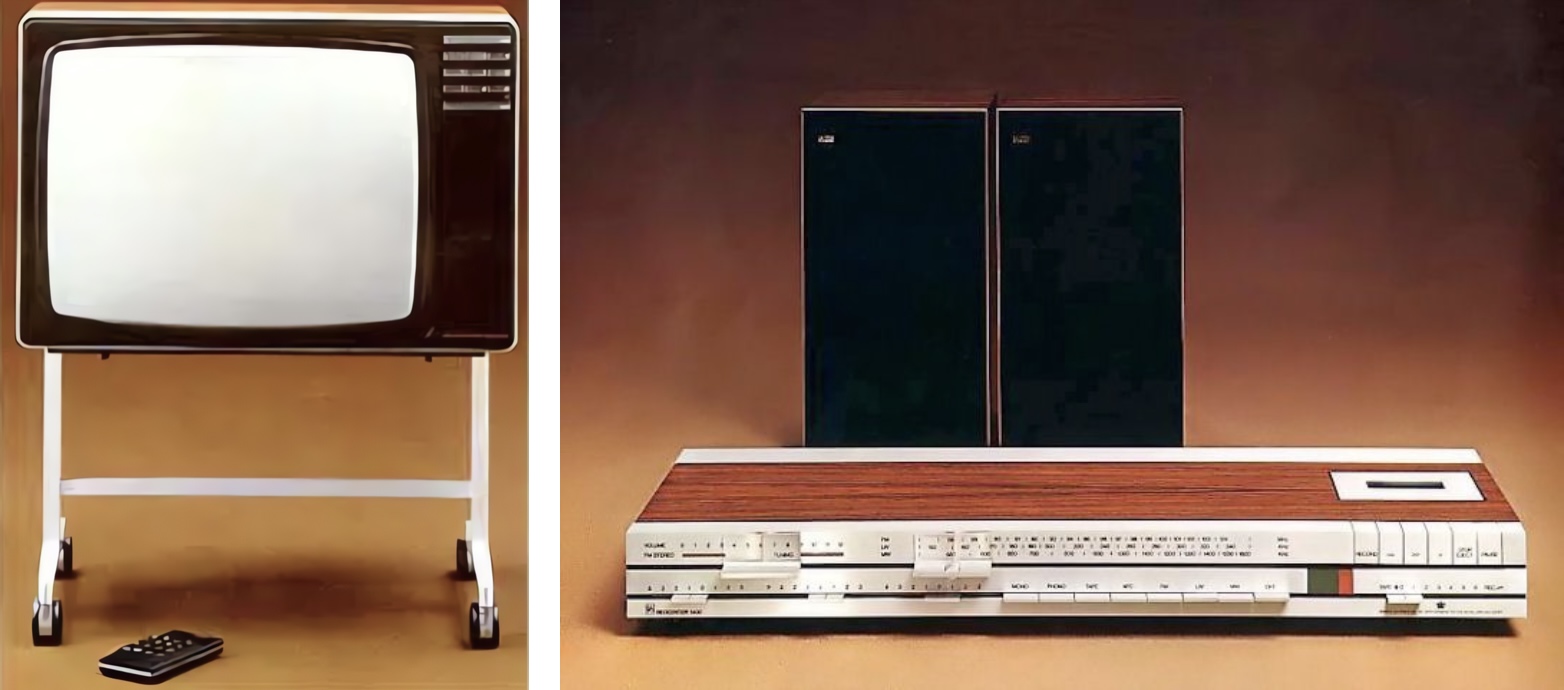
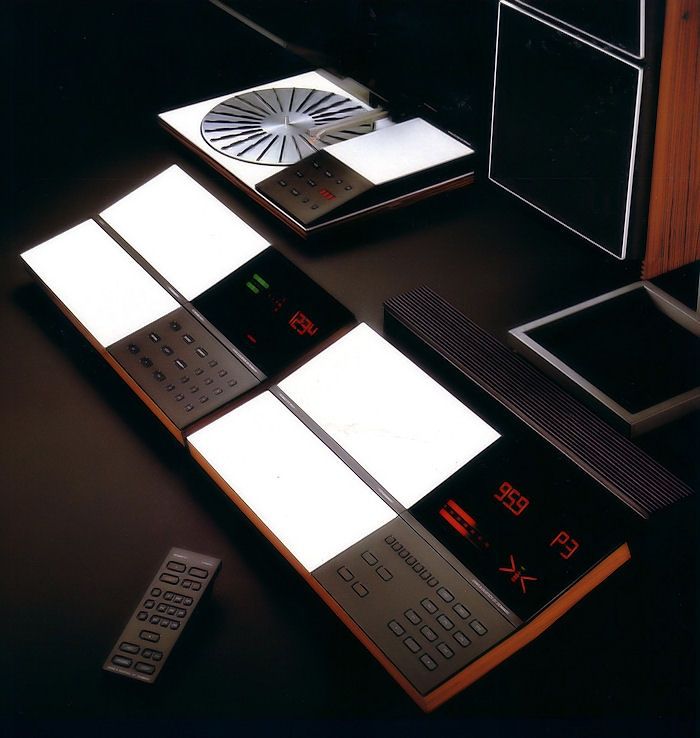
Besides a certain toy company, Bang & Olufsen is surely the Danish brand closest to my heart. Today the company turns 100 years old, quite a feat, especially in the field of electronics. When I grew up in Denmark, B&O was not a luxury brand, but very much a household name, their products found in many ordinary Danish homes. I remember my dad purchasing a 24″ B&O color TV in the mid-70s; if I recall correctly, the price was around 7000 DKK (40,000 DKK in 2025 prices). That TV lasted for many, many years. All the money from my confirmation went into buying a pre-owned Beocenter 1400 + loudspeakers. As a kid and teenager, I was inspired and fascinated by the clean, futuristic-looking products that were so utterly different from all the Japanese hi-fi equipment at that time (and today for that matter).

Beovision 3702 and Beocenter 1400.

I remember the legendary B&O designer Jacob Jensen doing a talk for us LEGO designers in Billund sometime in the 80s. He said he liked our spaceship designs if we could just get rid of those pesky ‘warts’ (studs) that were everywhere on our designs! Back then, the LEGO and B&O companies were of similar sizes; today, the latter is a dwarf compared to LEGO in terms of market position and revenue (75 Billion vs 2.5 Billion DKK).

Today, some of the B&O products feel more like expensive jewelry for houses and apartments in Dubai and similar tacky places. But their cheaper streaming loudspeakers and headphones are great and offer quite good value for money. I have done some concept work for B&O, which was an aspiration for me, both for the core brand and some early work on what was to become Beoplay. Today, I own two products from Struer, a Beolit 15 portable loudspeaker and those most excellent Beoplay H95 headphones, a real joy to use. The software could be better, but the build and the sound quality are very, very good.

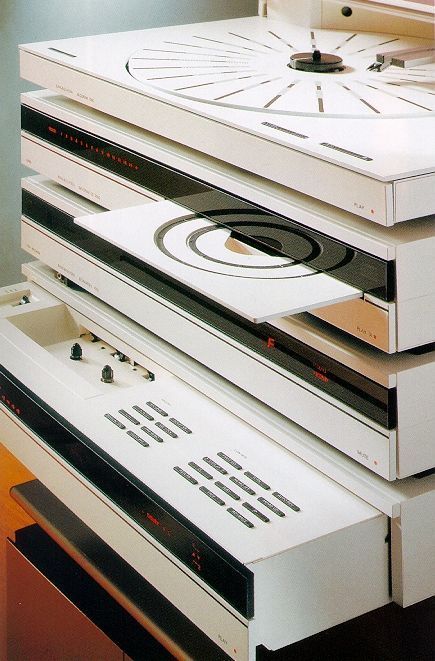
So happy birthday to Bang & Olufsen, here’s to another 100 years. Here are a few of my favorite beoproducts:
(Many more on my Pinterest board)

Can AI make art?

Short answer; No, but a person can make art (even quite good art) with AI, just as a few select people can do with a paintbrush or Photoshop. But perhaps AI in art is to be seen more like a musical instrument rather than a ‘tool’, as this long article (converted from a talk) suggests. Another take comes from cartoonist Matthew Inmann, who touches upon some of the same themes and dilemmas, and, funnily enough, also uses the metaphor of music at one point. But he likens AI prompting ‘art’ to pressing the ‘demo’ button on a cheap Casio music keyboard. Both are fairly long, but worth a read if you have time and interest, and both go beyond all the predictable knee-jerk reactions to AI ‘art’ and AI versus Art.

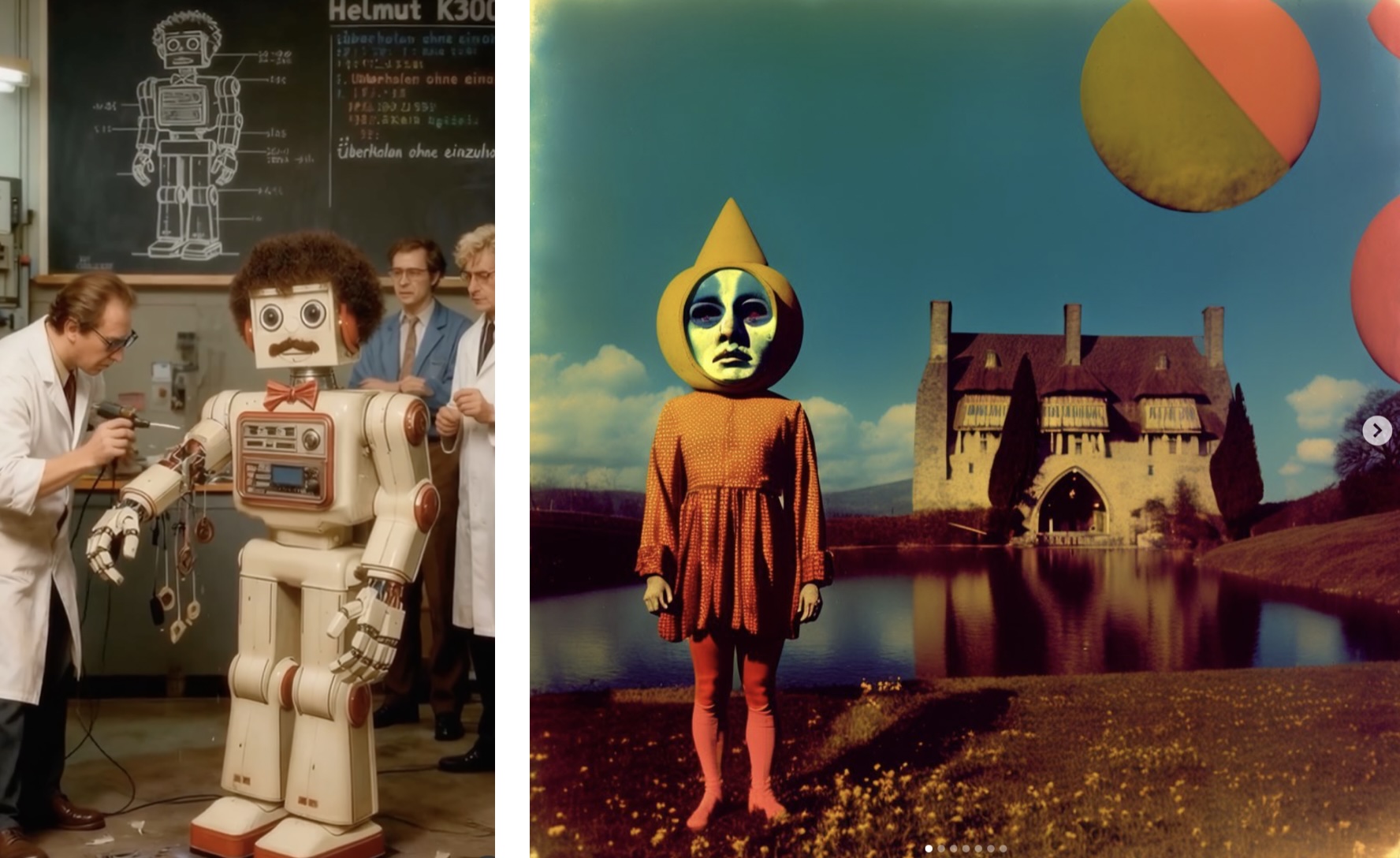
As mentioned earlier, I actively hate 99.9% of AI ‘art’ and visual slop that the net is so hopelessly full of now. But that still leaves 0.1%, and there are some signs of a new genre emerging. Here is a selection of AI-based Instagram accounts that I enjoy: Is it art? You decide..

DDR Mondbasis – Nostalgic German counterfactual reports from the future; love it!
Niceauties – One of the grand old accounts, surreal but with a clear theme and distinct style.
The Strangest Fleamarket – Visually interesting, bizarre creatures and characters.
Moss Carpet – It’s a vibe… Folksy and slightly unnerving tableaus from elsewhere.
Voidstomper – Enter at own risk, bizarre and scary
Aim not here – ‘Excerpts from interdimensional journeys powered by the human mind’

Bonus: Also check out Fellowship a place with many AI-positive artists to explore.

Image credits : DDR Mondbasis / Moss Carpet

I almost crashed

Not too long ago I almost crashed on my motorcycle. The keyword here is of course, ‘almost,’ and I will get back to that in a bit, but first a few thoughts on the joys of riding a motorcycle. For me, it started as a kind of happy accident; in my youth, I had never considered riding a bike, but one day in the mid-90s, out in Billund, the bus to Vejle drove off without me. So, a colleague offered a ride home on the back of his motorcycle, and I was sold on the spot; the acceleration, the speed, the open-air feeling, it just felt great. So, without telling anyone, I got the driver’s license and bought my own bike. That has been one of my best decisions in terms of the amount of fun and pleasure it has brought for almost 30 years now. I don’t go that fast (as opposed to when I’m cycling) and almost always avoiding highways and very often taking new, unplanned detours on small roads in the countryside.

Had I not missed the bus by accident 30 years ago, I may not have found out about the joy of riding, and of course, there is a little lesson about trying out unfamiliar and unexpected things. You get the picture. Motorcycles are statistically a bit more dangerous than cars, but I have always tried not to take any chances. Someone early on told me it is so important to ride defensively, as you are the more vulnerable part compared to cars. Many will know that motorcyclists always greet each other on the road (except for police officers and Hells Angels types!) This is such a nice tradition, feels a bit like I salute you for also being an adult on two wheels instead of four.. In fact, as I was headed home from Kolding a while back, I was thinking about this very thing as two motorcycles approached me.. I turned my head for a split second to greet them – the road ahead has a slight bend where the driveway leads into the local inn. And I had not noticed that the car ahead of me had abruptly slowed way down to take a sudden left turn. I was going close to 80 km/h, and without even thinking, I locked my brakes hard and barely managed to steer around the car and then come to a sudden stop. So close.. All my muscles were extremely tense and frozen up, especially in my legs, and I was a bit rattled by the incident. But I quickly got back up to speed and rode homewards like nothing had happened. It felt like the right thing to do, just get back on the road straight away. The incident kept playing in my head for a while, but now I’m just thankful nothing bad happened. Would love to ride for another 30 years if the machinery is up for it.

Observations on AI, July 2025

When people criticize AI in general and LLMs in particular, 90% of the time all I hear is “I’m bad at prompting.” Many laymen still treat ChatGPT as a glorified Google search. Custom instructions and asking directly for what you want will get you far.

Just ask. That is the simple key to a lot of good use of AI. If you don’t like the responses, be more clear about what you want. If you don’t know what to ask, just ask the AI to help with the questions or have it literally question you before answering. Easy. Make sure to give it something to work from; context is everything.

Remember back when we got flashlights in our phones? We suddenly realized how often we actually have a need for a flashlight. It feels a bit like that with AIs; you suddenly realize you have many more questions and topics to explore when you can just ask and get good answers without much friction.

While some of us find great value in AI, there is a clear and growing backlash happening, especially when it comes to visuals. We grow tired of visual gimmicks faster and faster (remember Ghibli-style and cutting up glass fruit?) AI/LLMs are not going away, but the resources needed for running all those servers are vast, and growing like crazy..

When people share long threads where they have a ‘dialogue’ with an AI, more often than not it is just as boring as hearing long and intricate stories about their dreams and nightmares. It’s too specific and personal; without the proper context, it’s close to meaningless. And did I mention it’s also boring?

IBM chairman Thomas Watson is perhaps most famous for the (false) quote I think there is a world market for maybe five computers. Some say half-jokingly; Watson was only off by four, but in an AI world, the five can be said to be the handful of frontier AI models fighting for dominion: ChatGPT, Gemini, Grok, Llama, Claude and perhaps a Chinese wildcard.

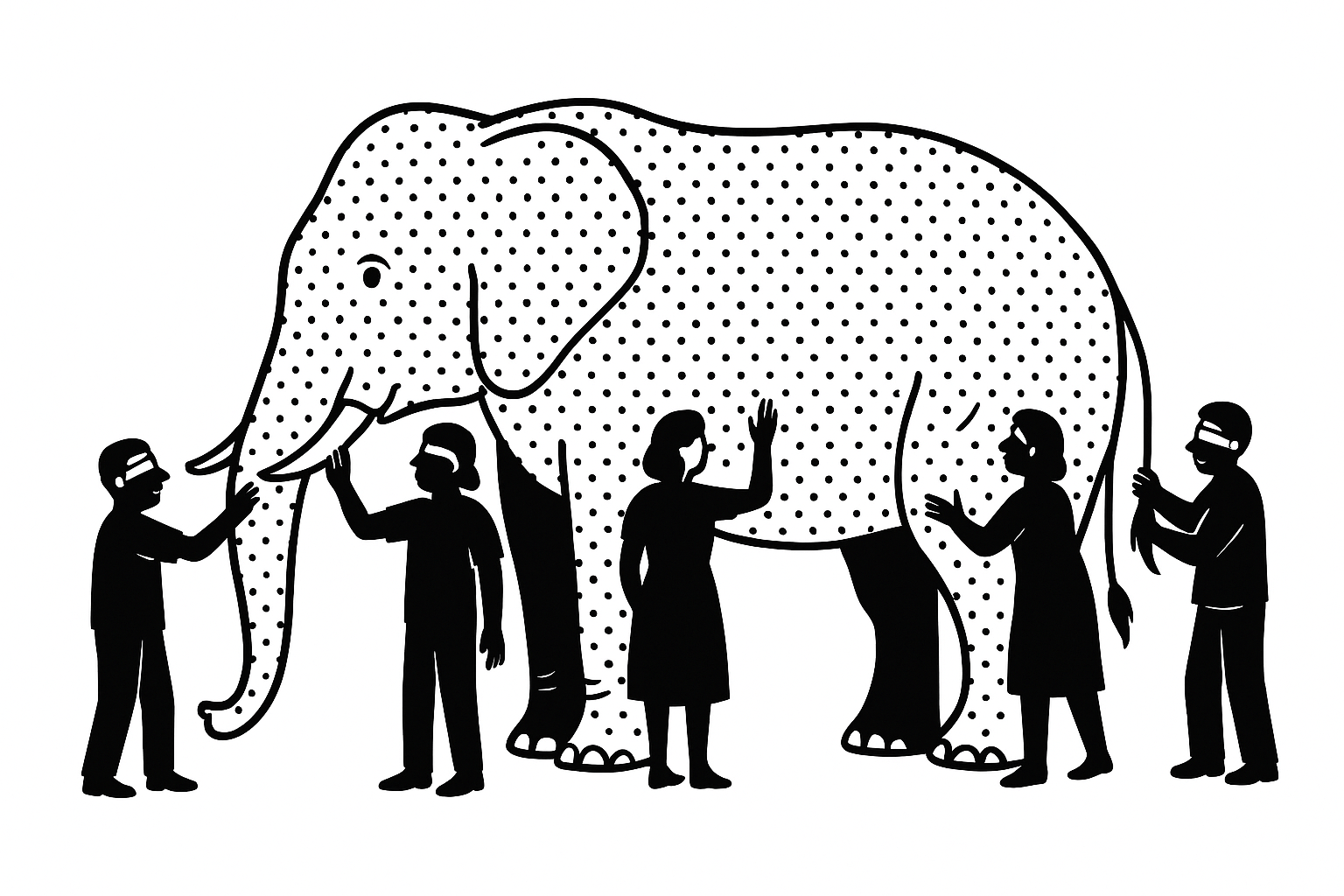
If a person claims they know what is going to happen with AI in the next 12-18 months, run away as fast as you can. No one knows this in any meaningful detail; a few may know the broad strokes. And those who know the most are busy building it. Far too often, the predictions remind me of the blind people and the elephant, except AI may very well be the whole room rather than just the elephant in it.

(And yeah, I made that image using AI)

Reaching out

Someone said to me; “I will be following from the sideline.” Honestly, I like that thought. (Love to) build it and they will come (maybe). Life is about reaching out, and in some cases, waiting for someone to reach out. Both are good; life is a balance between push and pull, between wanting and waiting. Are you driven toward something or driven away from something? Knowing what you don’t want can be a powerful force because then the outcome is open. There is no fixed goal, so perhaps you’ll discover something unexpected while you run away from the unwanted. Going for a specific goal can be good, but sometimes it will give you tunnel vision. And sometimes you don’t really know what you want. As in many other cases in life, the main thing is to be aware of those different approaches and to consider the balance between actively seeking out things and just letting things happen. In my experience, serendipity is seriously underrated. My work life can be said to be a fairly good example of this. For 25+ years, I have had my own one-man company, and as if by magic, work opportunities have found me at the right pace and at the right time. Something interesting has always come up when I was close to being bored and/or slightly scared. Being self-employed has always felt like freedom with a touch of fear. It may sound like a somewhat passive approach, but no. It has just been the way things worked out. Very privileged, I know. Less than a handful of times have I reached out to get work, and in those cases, it was mainly a desire to work with a specific company. For instance, I’ve been a fan of Bang & Olufsen since I was a teenager, and it was on my bucket list to do some work with them. So I made an active choice to go to Struer and show my work. I did a couple of consultancy jobs there and for a couple of other cool companies along the way. But most of the time, interesting work has come to me, and I am super grateful for that.

Sometimes I need a break from social media, and then I simply stop posting and stay quiet for a while. Sooner or later, a few people will reach out and ask if everything is OK. Those who know me will know that this is normal procedure for me to take breaks and go semi-offline for a week or two. But it is appreciated when people who don’t know me well reach out to check if everything is OK. At one point in my life, I had a feeling that some of my relationships were asymmetrical in the way that it was always me who had to reach out to keep the connection active. So I made a choice to not reach out and then wait and see. Those friendships died in that operation but left space for new ones. All good.

How I look at art exhibits

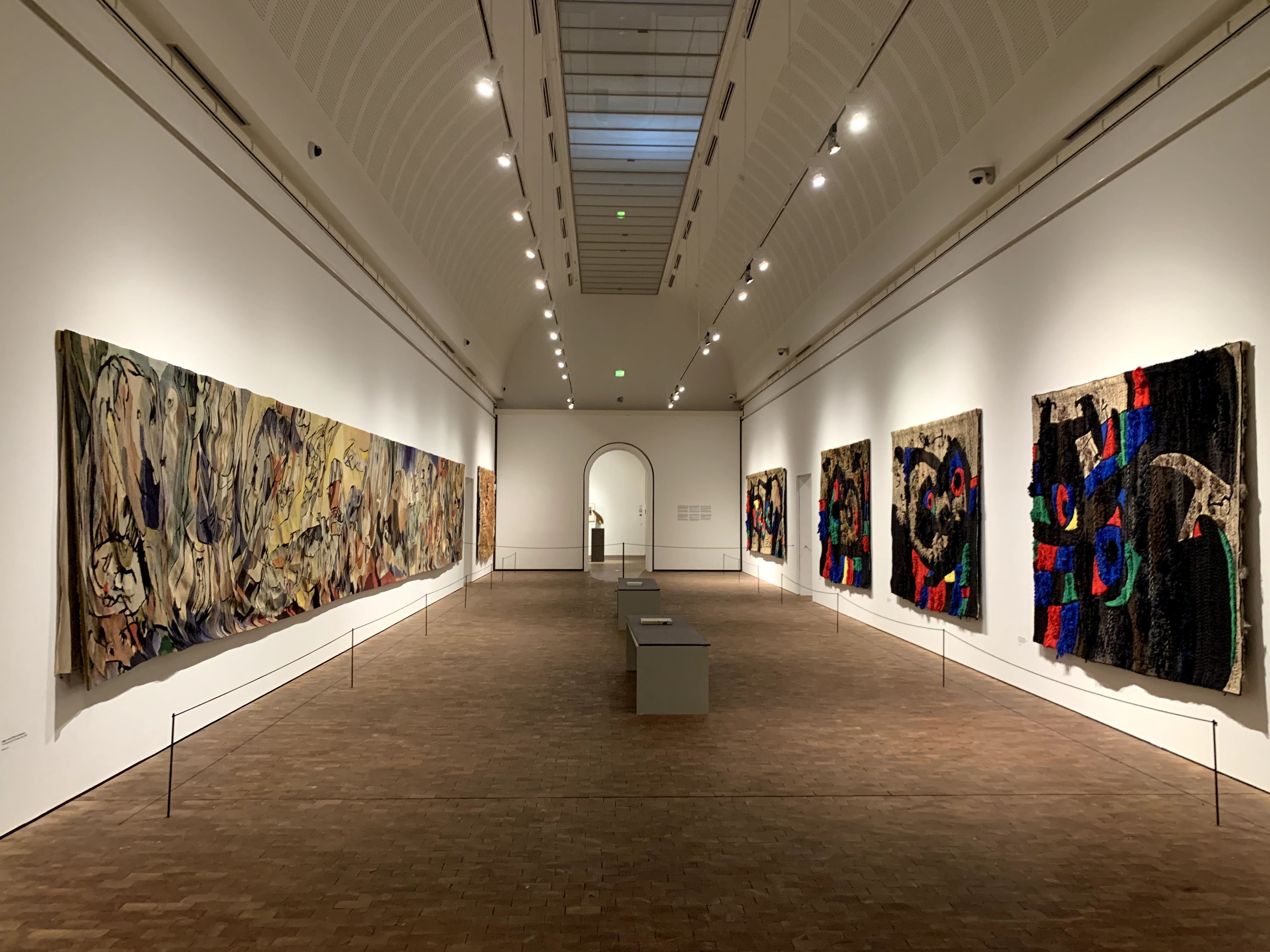
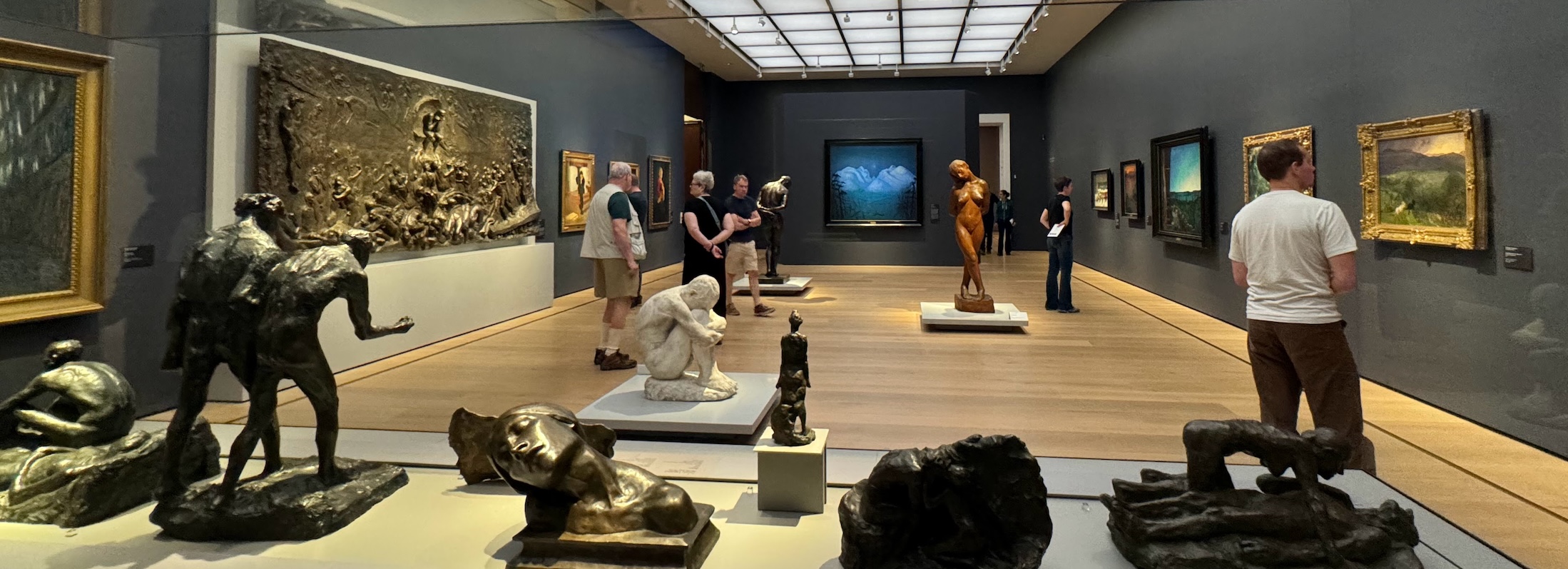
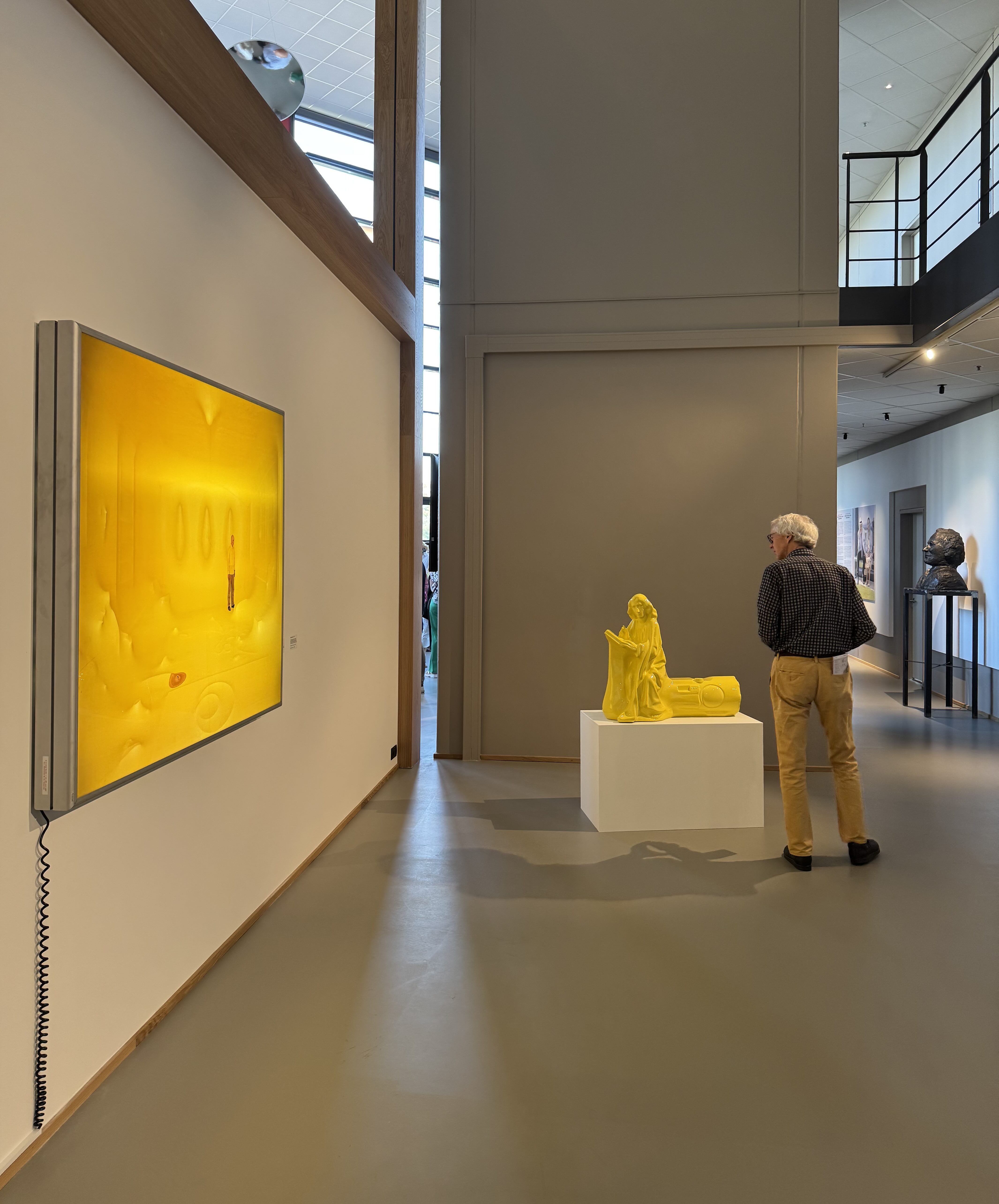
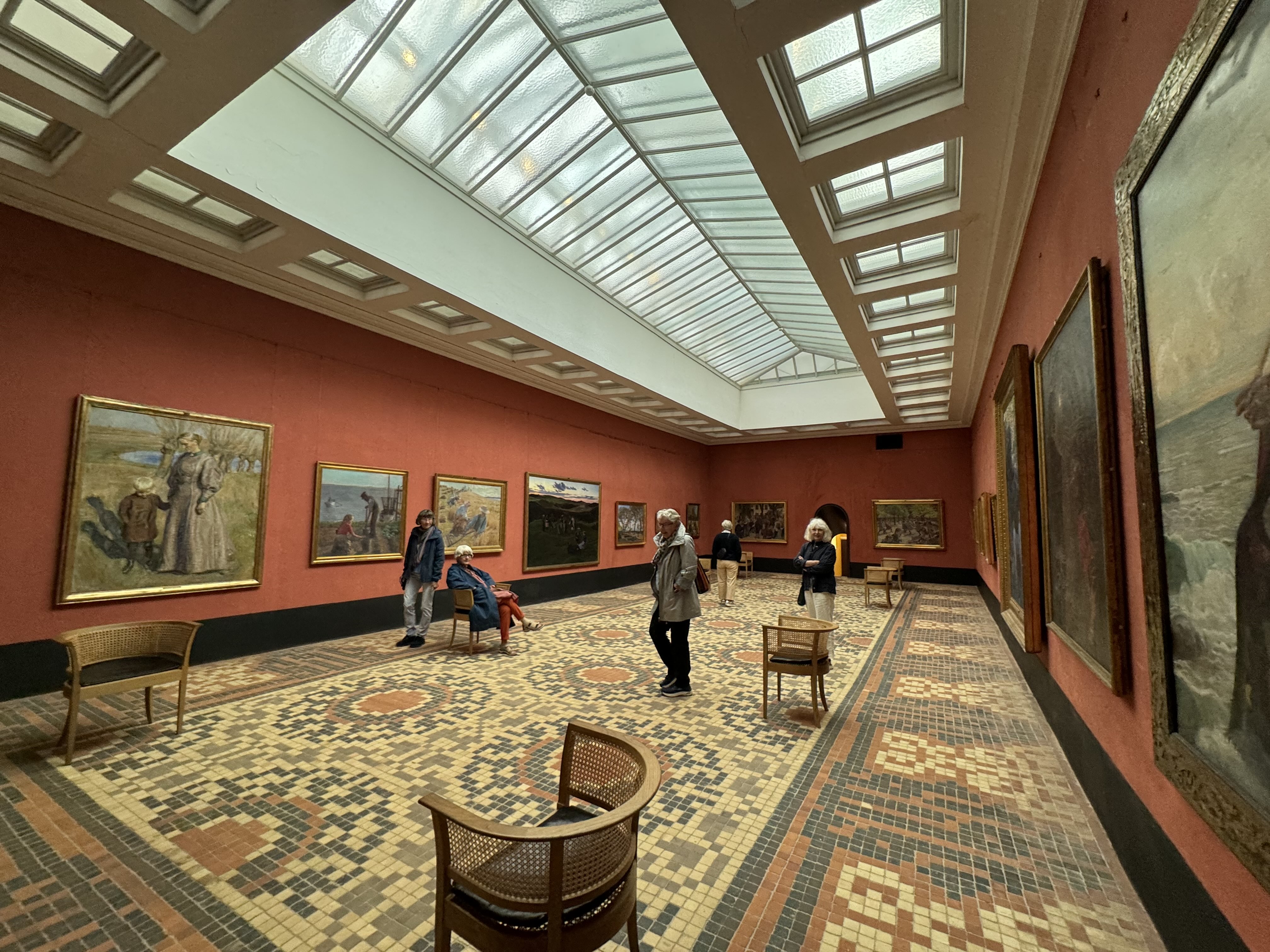
Maybe you can use my approach; it’s a simple and useful way to sharpen your intuition. Always come to the museum or the show when it opens in the morning. That way, you have optimal energy and openness to take in new things. Start by walking all the way through the exhibition at a fairly high pace. Don’t stop during the walk, but try to notice all the artworks without thinking or judging the pieces. Then, walk back to the beginning. Now you know more about how to pace the visit, but more importantly, you have a sense of where to put your attention. And I think most people will like to know what they are getting into; we like estimated reading times on articles, and we want to know how long that video or podcast is before committing our precious time. There is always way too much to see and take in, especially at the big museums. But I’ve found that my intuition will point me to a handful or two of artworks that deserve a deeper dive. So, more often than not, I will spend 80% of the time on 5-10% of the art. The Tate has a good little piece on Slow Looking, well worth a look. The approach described works well for me; perhaps it’s something to try?

I am generally not interested in knowing the titles of the works or the artists’ intentions or life histories, etc., beforehand. This limits the ability to simply experience the work without prejudice. The most important thing is to experience the works, not sort them into little buckets of “beautiful,” “ugly,” and so on and so forth. Always having a kind of “beginner’s mind” when looking at art is extremely important to me. I know a bit about art history and artists (especially the current Danish ones), but I believe that knowledge can get in the way of having an immediate experience; it can become a case of intellectual connect-the-dots that does nothing for me.

My approach to watching movies is similar; I generally like to know as little as possible before watching. The movies I like are often a bit strange and open to interpretation, so I prefer to be as open as possible. But after watching a good movie, I will often take a dive into analyses and reviews. I will also be happy to take in a good behind-the-scenes feature (something which has sadly been a bit lost with streaming; DVDs often had all that cool bonus material. But often there is stuff to be found on YouTube). Here are some unusual movies that I like.

A few ideas for your next visit to an art museum;

– If you go together with friends or family, split up, at least for some of the time at the exhibit. Then meet up and talk about what you’ve seen; maybe revisit some artworks together. But looking at art is really not a team sport.

– Show up early. Once I went to the Louvre at opening time. Most of the guests headed straight to see you-know-who; I went straight to the furthest corner of the world’s largest museum. A whole hour passed before I met another guest; it was great.

– If you really like the art, try to see if you can go twice to the same exhibit. It can be an extra look through at the end of a one-day visit, but even better to come back at a later date. Once a year or so, I visit Statens Museum for Kunst in Copenhagen to look at new stuff, of course, but also just to revisit some favorite paintings.

– Take lots of photos. It’s impossible to remember all the great stuff you see on an extensive visit to a museum. Today it’s super easy to do an image search later to get more info on the works. So it’s not so much for looking at the art per se, more as a visual diary for later recall and research.