OK Computer
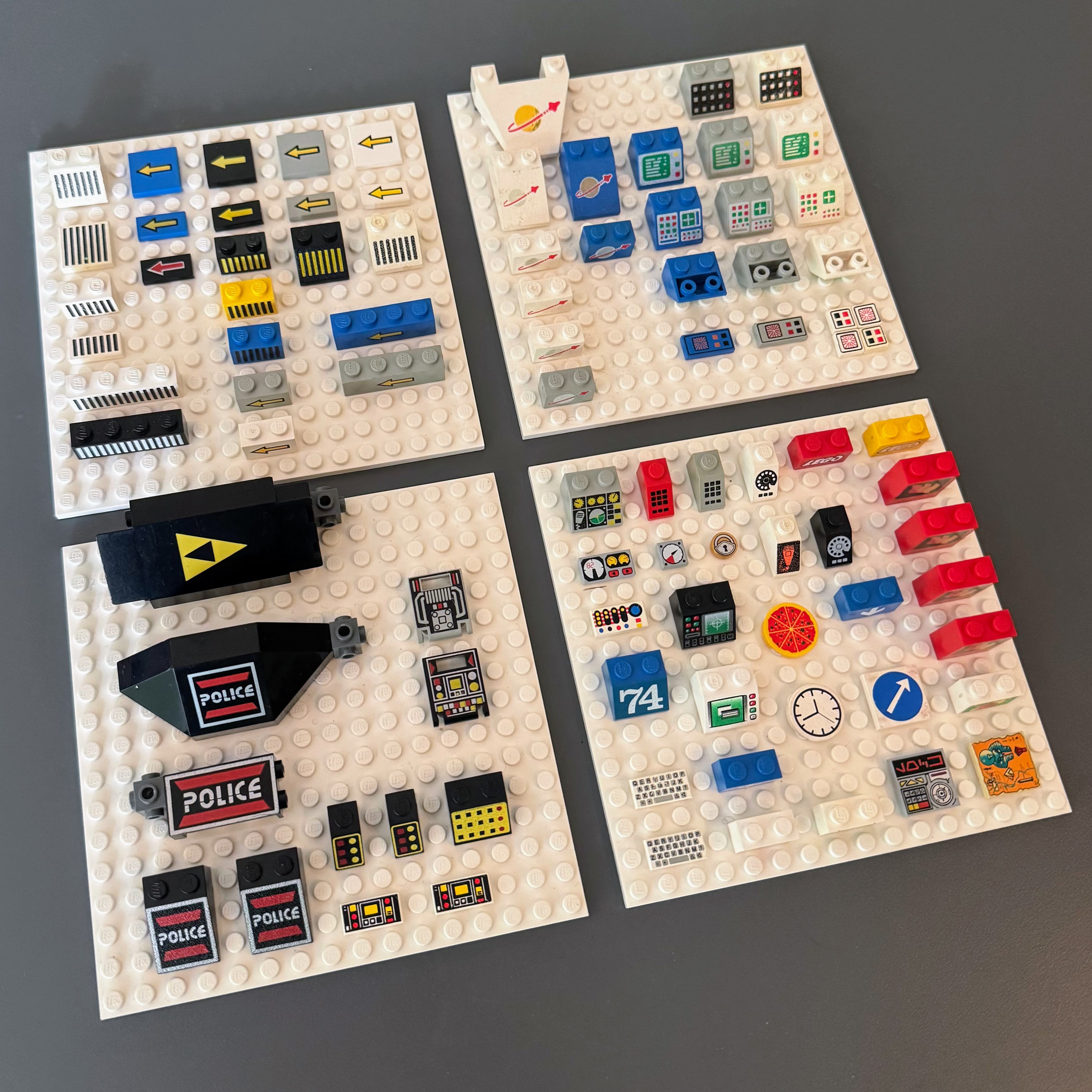
To me there is something striking about the graphic simplicity of the old LEGO decorations, especially the ones related to LEGO Space. The classic Space logo and the 2×2 slope with the green computer screen and colored buttons are etched into the minds of many 70s and 80s kids. Found quite a few variations while building something recently, good fun. If you enjoy this kind of stuff, be sure to check out ‘The UX of LEGO Interface Panels’. Oh, and check out this scaled-up 2×2 brick computer, and a functioning OLED display inside a 2×2 sloped brick.
Protect artists at all costs
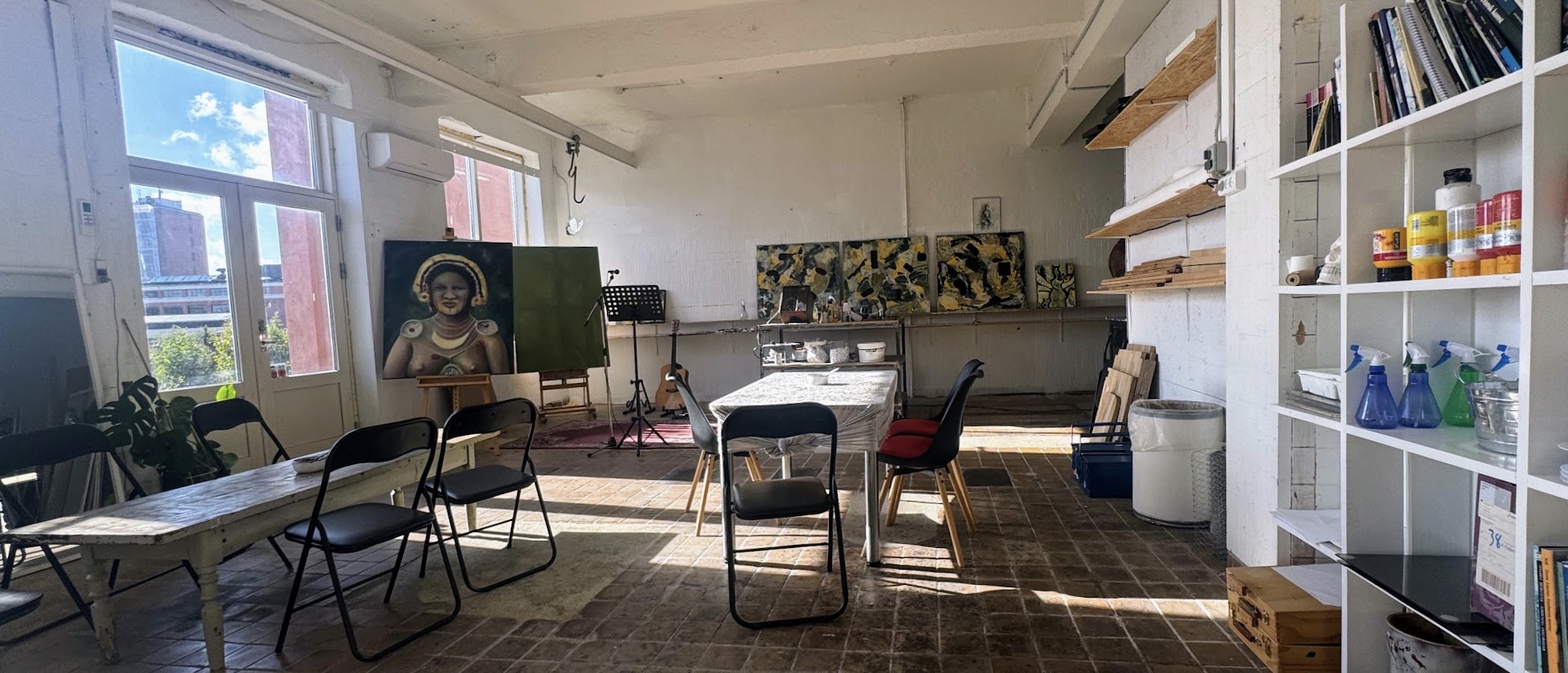
Art can show us things we didn’t know or didn’t see. Art does not have to have a purpose; it is enough that it exists in the world. Artists, the good ones (whatever that means), think and feel in ways we cannot always understand. That has an almost infinite value. In an age where machines pretend to think and be creative, we need more art, not less. And if/when aliens or alien intelligences come to our planet, I’m sure they will get in touch with the artists before they look for leaders and business people. Support art and artists. Please, protect artists at all costs.
Lucid Dreaming
In some short periods of my life, I have had lucid dreams, which to me is a very exciting and interesting state of being. Recent research into the matter shows lucid dreaming to be a third state of consciousness, which in itself is exciting, but the actual experience of being awake in a dream and, to some extent, being able to control the dream is something else. It’s been a while since I have been able to do it consistently, and none of the well-known techniques has helped. But last night, something interesting happened: I woke up involuntarily at around 3 AM and was awake for an hour, and as I proceeded to get back to sleep, I entered the lucid dream space. Before that, there is the liminal space in between being awake and asleep, and there I had an image in my mind of the real world being in my left field of view, and on the right-hand side was the dream world behind a barrier of sorts. But I could see the contours of a hole in the barrier, and the more I focused on that opening, and the more I had a kind of inner dialogue about that, the more it opened up until I could put my head inside it, and after a bit of mental struggle I eventually, I floated into or up to a room that felt a bit like a gravity-free mental fitness room (for lack of a better description) where I could float around and examine different objects. It lasted for a while, and then I gently left the space and woke up again, but with a feeling of a breakthrough and with a will and motivation to go back there to explore that space more, much more if possible. This I will attempt tonight. And will report back; perhaps this could be useful for others to try. Looking forward to it..
Update: It works quite consistently, instead of trying to ‘think about nothing’ (which is hard) when being the liminal space, it works much better to ‘chat’ about what I can ‘see’ behind my eyelids. And putting that into words tends to strengthen the hallucinations, so it goes both ways. Talking things into reality in the dreamworld. Which is cool.

Stanley Q-Brick goes hard
This is pure cinema, combining several great elements such as LEGO Blacktron, Kubrick, strong notes of Event Horizon, Dark City and perhaps inspiration from Phil Tippett’s ‘Mad God’. The glitchy retro-futuristic visual style, the eerie sounds, and the music create a sense that something dark and strange is happening beneath the rugged plastic surface.
Even the title ‘Echoes.of.a.Dreaming.Skull.VHSRiP.mkv’ is striking. These videos by Stanley Q-Brick deserve to have many more views. This is part three in a trilogy (see parts one and two). Watch it on a big screen, or at least in full screen.
The Space Hotdog Incident
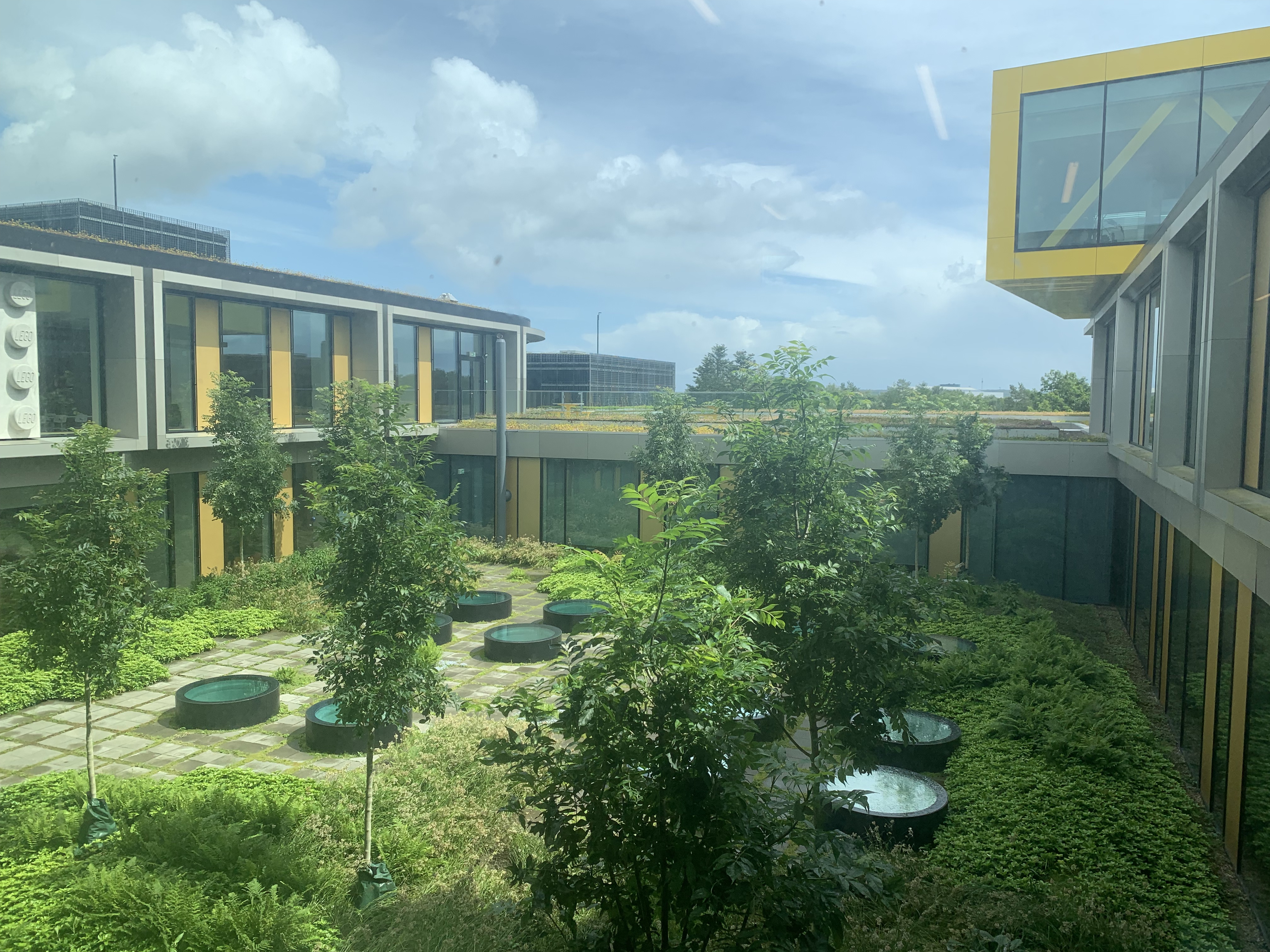
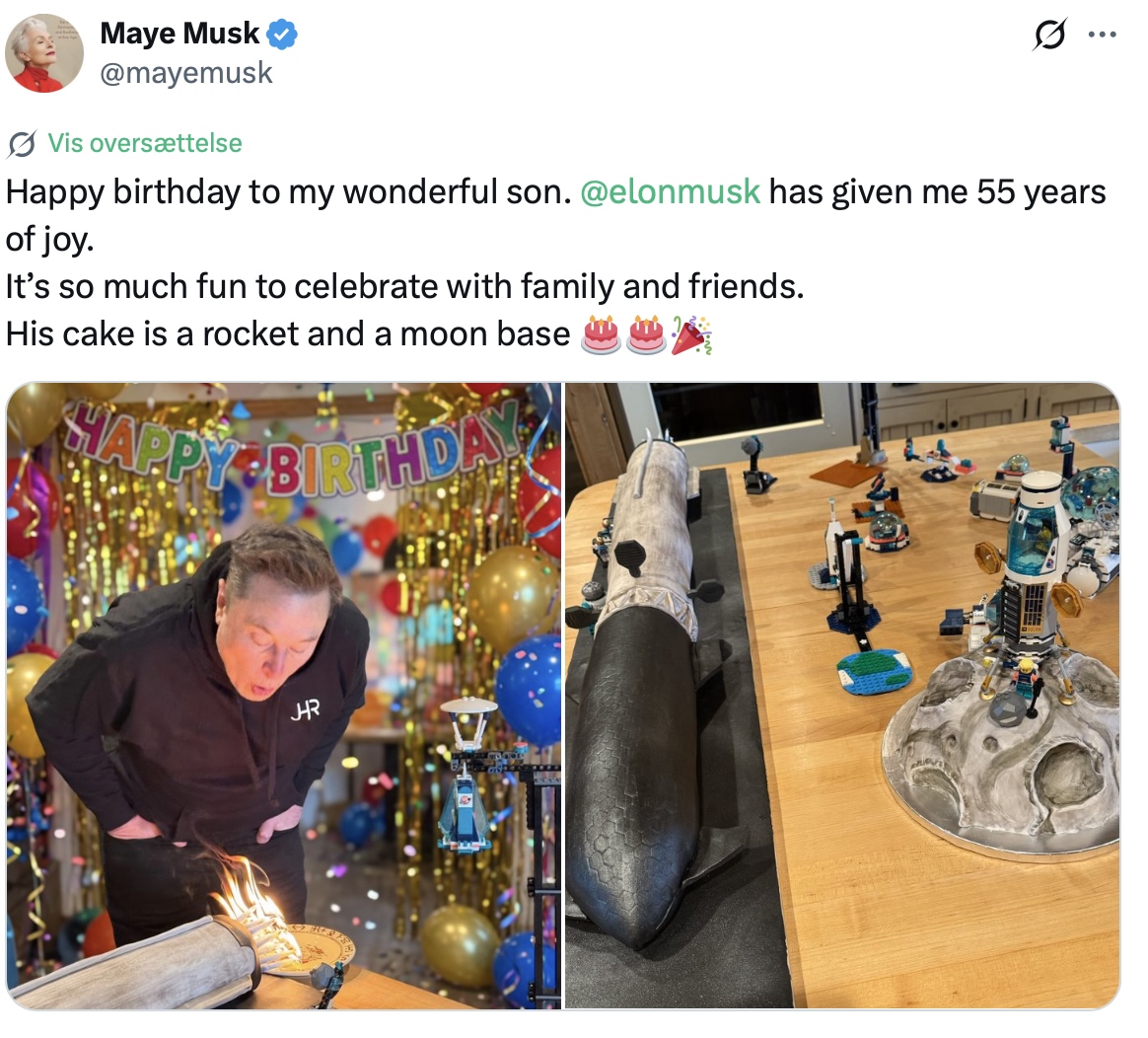
So exactly three years ago, I was sitting in the wonderful LEGO Campus and considering the best angle to shoot a LEGO hotdog into space. I was drinking excellent barista coffee and enjoying myself while working on a concept for a LEGO Education project (the boxes came out this year). I thought, “Here I am, back at the HQ, doing pretty much what I did when I started out in Billund decades ago: getting paid good money to consider the best angle for a hotdog to get into imaginary orbit. This is awesome!”. I felt a lot of gratitude to be able to do that. Such a privilege 🩵



Winter/Summer


A few thoughts on the LEGO Smart Brick

There are now more than one trillion LEGO bricks on the planet (yes, it’s true, look it up). I wonder what percentage of those bricks are actively played with? Quite a few are stuck on dusty shelves and in bins under the stairs. LEGO bricks are meant to be played with, and anything that can (re)activate bricks is great in my book. That’s one of the reasons to be excited about the 2×4-sized smart brick. Part of a system, but also something truly new.
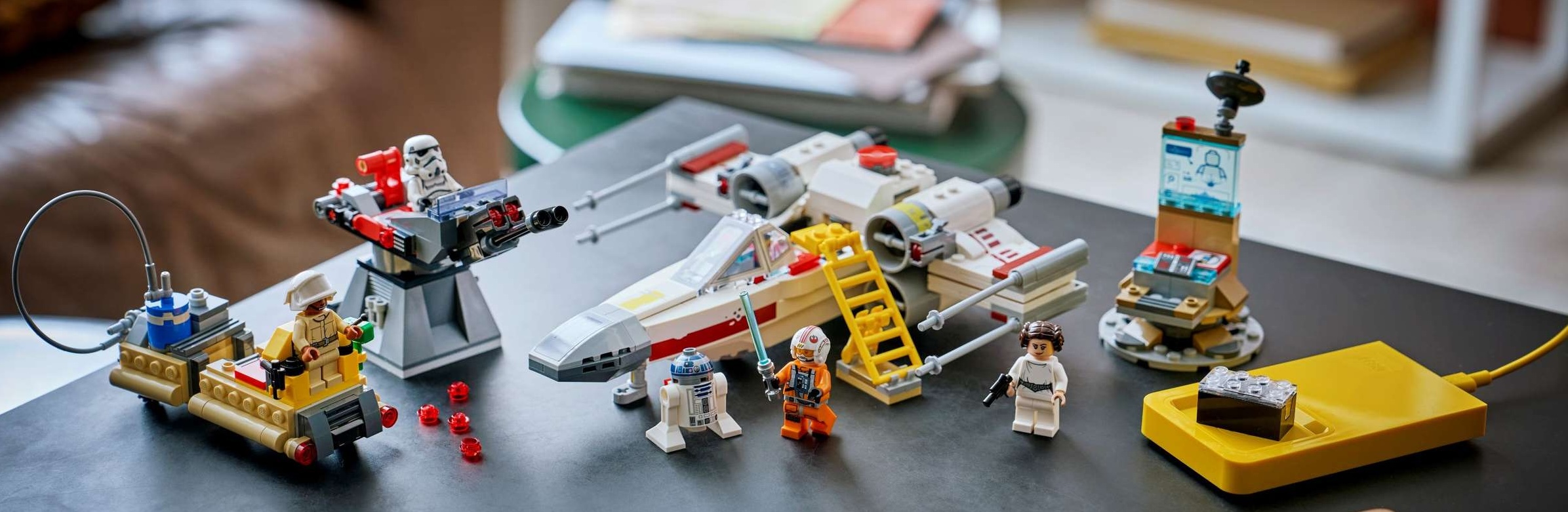
Looking at that X-Wing fighter makes me happy. It seems like a really fun and robust toy to be played with. A model that can be swooshed around and smaller minibuilds + characters. Tons of opportunities for free play and roleplaying, a microworld. And every part is exposed and playable, as opposed to all the so-called ‘smart toys’ which are often a kind of black box with some tech inside (and no longevity). I like all the mechanical, kinetic builds and tricks used to activate the smart brick in the Star Wars sets. The smart brick has to be physically moved to activate, and that is both banal and profound. It feels both novel and old school LEGO at the same time. I very much like that there are no screens involved. I once said (half-jokingly) that augmented reality play is great for all kids with three arms: two for playing and one to hold the phone. My thing is open-ended physical play, and it feels like the smart brick will support that well.
The smart mini figures are speaking a gibberish language similar to the one in the LEGO computer games. Would the product be better if it could produce perfect audio samples from the Star Wars movies? I would say a big no. I think the product has about the same resolution as LEGO bricks. A LEGO X-wing is not a perfect replica of the craft seen in the movie either; it has a different resolution and can, of course, be broken down into small pieces. Much of the critique of the LEGO smart brick sounds to me quite similar to the time when people were complaining about there being too many special LEGO pieces. That critique has pretty much gone away, but it was also quite silly back in the day. To this day, you are most welcome to buy a big box of classic 2 x 4 LEGO bricks; you can even build a Star Wars X-Wing out of those bricks. It will be clunky and in a different resolution, but no one is stopping people from doing this. Same goes for the smart brick. And the current sets are targeted at kids from 6 to 9 years old, so perhaps also let them have a go and decide? That is not to say that the brick will automatically be a success in the market, far from it. But I’m confident that the smart brick will stay around for a long time if the economics behind it make sense. Of course, if LEGO is losing money on each set and if the smart brick does not result in increased sales of traditional bricks and engagement, then it will be killed off eventually to make shelf space for more profitable products. But I could see a market for more creative, interactive toys. The majority of the so-called smart toys are incredibly bad, with no real longevity or lasting play value.
The platform and the tech, as they stand now, are surprisingly close to the concept presented to the team I was part of some five years ago. Impressive! I can easily imagine the many prototypes, pivots, compromises, Teams meetings, and long days along the way. But the core concept is intact, including the positioning system, as described in the “Saved by the bell” section of this behind-the-scenes story. I have absolutely no insider insights into this, but I’m guessing that the smart brick roadmap is long and wide, and I sincerely hope LEGO has the patience to let the system unfold over a long period of time.
Godtfred Kirk Christiansen (creator of the original LEGO brick) was known to go down on his knees in product meetings, literally, in order to see (and try) the prototypes from a child’s perspective. This is still sound advice and worth remembering. To me thay is still the core LEGO experience. Godtfred would probably have liked smart bricks (perhaps initially sceptical, but I’m guessing he would have been amazed by the new, old 2×4 smart brick. Star Wars probably not so much – he was not so big on “battle play” 🙂
My first boss at LEGO, Jens Nygaard Knudsen (inventor of the minifigure), once remarked that lights were more important than sound, because kids could make their own sounds while playing with LEGO – but kids can’t do lights. I’ve always thought that was both hilarious and true. So back in the 80s we had the 9V Light & Sound system, and I designed a LEGO Space Police set (6781) that only had blinking lights, no sound (that sound brick was incredibly expensive). I’m sure kids will continue to supplement the smart brick sounds with their own. And I also strongly suspect that Jens too would have loved the smart brick if he were still here.
It was the first project for me where remote work was not just an option, but necessary (there was some COVID around at the time). It was also an a-ha moment for me to see how well that worked – most of the time probably more effective than being in the same room. Such a great team, full of talented people who could execute quickly. Sometimes we would literally start with a blank slate on Monday morning and end up with a working prototype to play with on Friday. It was great, and sometime I miss being part of a team like that.
For me personally, it was a huge pleasure to build actual, physical LEGO models again — lots of fun. I did a few runs to the local Føtex to get bricks (at the time it was faster than going to locked-down Billund), but I also took a deep dive into my own vault for materials. So some of those model prototypes literally contain elements from my childhood (and my kids’ childhood as well). Not many products in the world can do something like that. The system works.
Note: I haven’t yet played with the final products, but I’m hoping to do so before too long.
Blackstar

David Bowie died on this day ten years ago, so I watched my favorite music ‘documentary’ once again. It is Moonage Daydream by Brett Morgen, and it is brilliant. Such a dense piece of visual art and storytelling, extremely multifaceted and complex, like Bowie. It took five years to make in total and two years to edit, and it is easy to see why. I also watched the new documentary ‘Bowie: The Final Act,’ and it was good. (If you are in Denmark, watch it here). Also, check out Bowie Bible, what a website (yes, those are still around). And ‘David Bowie – The Last Five Years’ is free to watch on YouTube, recommended.
“At the turn of the 20th century, Friedrich Nietzsche proclaimed that God is dead and that man had killed him. This created an arrogance with man that he himself was God. But as God, all he could seem to produce was disaster. That led to a terrifying confusion: for if we could not take the place of God, how could we fill the space we had created within ourselves?”
David Bowie, 2002
Moonage Daydream starts with this quote which leads into this monologue about the nature of time.
There were many things to like about David Bowie besides the music; he loved art and knew a lot about it, was an okay painter himself, read a lot of books, and last but not least, he had a great sense of humor. Some saw him as somewhat distanced and cold person, but he was often very funny in interviews and seemed to enjoy a good laugh at the absurdity of fame, life, and death.
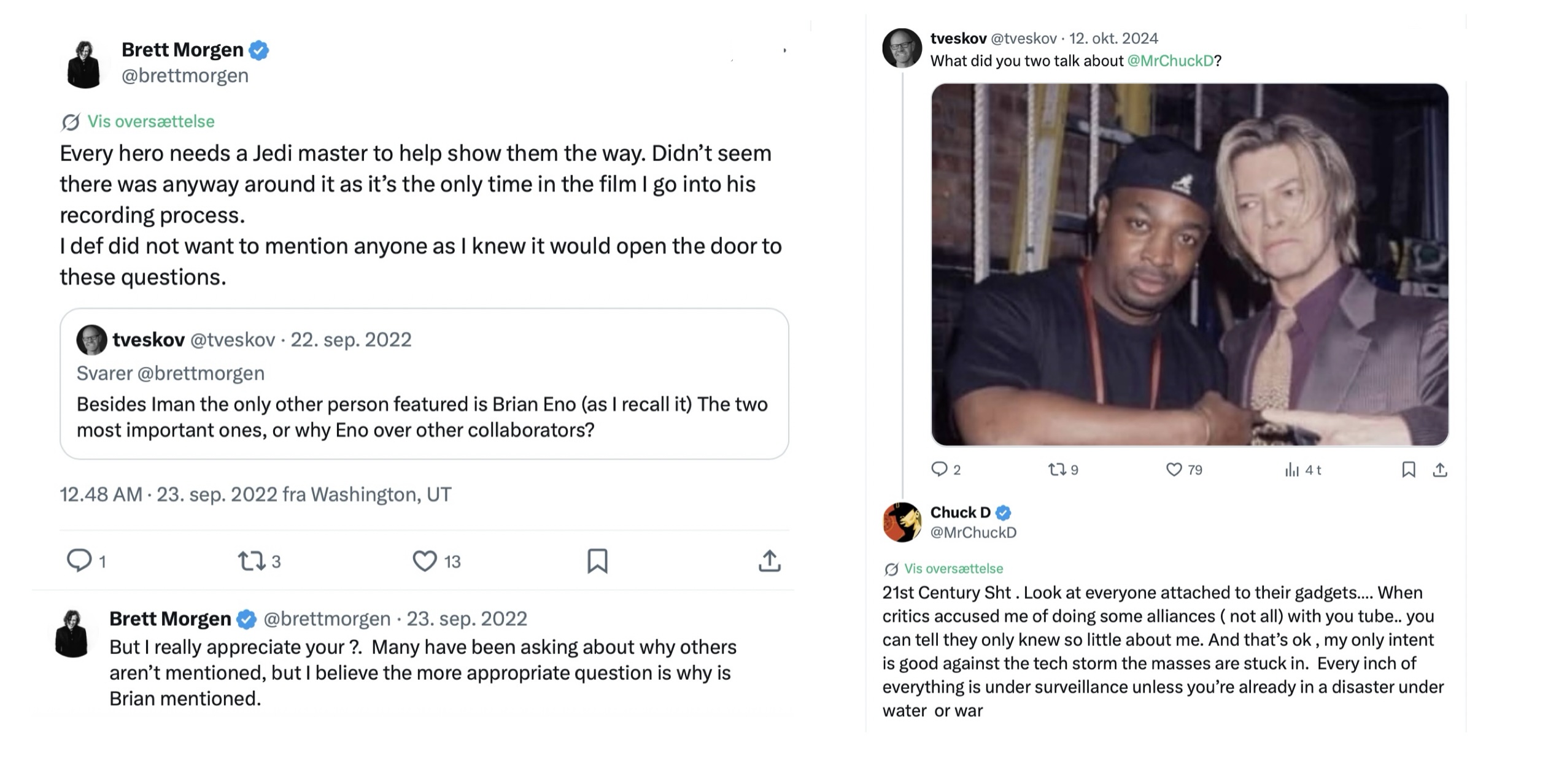
A favorite moment; Bowie covers Simon & Garfunkel’s “America” for the post 9/11 benefit concert in October 2001. He was a resident of NYC at the time, and it seems to me that he dialed up his english accent, perhaps to empasize the city’s international/immigration vibe. Enjoy this simple performance.
Joy in Repetition
I enjoy taking long walks in novel locations, but what I enjoy even more is my daily walk, which is pretty much the same every day. Or rather always as never before. You cannot step in the same river twice, and the daily walk will always be slightly different even if the route is the same; weather, mood, light, and seasons will change. A good time for thinking, a meditation. So much of life is waves, repetition, routines. It’s all good, as long as joy is part of it. Like a child who laughs 20 times in a row when playing peek-a-boo, or as Prince sang, ‘The song’s a year long and had been playing for months when he walked into the place,’ and where the singer in the song only repeats ‘Love me’ infinitely.

The world outside my window
Yeah, this a color photo.